How to get around Italy by train: a complete guide
This page contains affiliate links. If you make a purchase through one of these links we make a small commission to help run this site, at no cost to you. Making a commission never affects the advice we give - see our content policy.
Italy’s train network is one of the best in Europe, and it’s the easiest, cheapest and most sustainable way to travel between cities. We’ve used trains for every trip we’ve taken to Italy – Rome to Florence, Florence to Venice, Naples to Pompeii – and we’d always choose them over renting a car for a city-based trip.
You arrive right in the centre of town. You don’t need to worry about parking, toll roads or the ZTL zones (restricted traffic areas that’ll land you a fine before you even know what happened). And everyone in the group can have a glass of wine at lunch.
This guide covers everything you need to know about how to get around Italy by train: the two main train operators, how to buy tickets, what the trains are like, how much you’ll spend, and the tips we’ve picked up from doing it ourselves. Whether you’re planning a 10-day Italy itinerary or just need to get from A to B, this will help.
Our recommendations
🚄 Book your train on Omio (shows all options and easiest to use)
🚕 Book your airport transfer on Get Your Guide
🚗 Hire a car from Discover Cars (better for Tuscany, the Amalfi Coast or rural areas not served by train)
📝 Get your travel insurance from EKTA
📱 Get cheap data abroad with an eSim from Yesim
🚌 Book a tour on Viator or GetYourGuide
Why travel Italy by train?
We’re biased as we love train travel, but Italy is one of the countries where taking the train is so much better than other options.
It’s fast. High-speed trains connect Rome, Florence, Venice, Naples, Milan and Bologna at up to 300 km/h. Most city to city journeys are 2 hours or less.
It’s cheap (if you book early). High-speed tickets start from around €19–25 if you book a few weeks ahead. Regional trains are even cheaper – typically €5–15 for shorter routes – and don’t need advance booking at all.
It’s comfortable. Italy’s high-speed trains have air conditioning, power sockets, Wi-Fi, and a cafe car. Seats are spacious and you can walk around. It’s a completely different experience to flying.
It’s better for the environment. Train travel produces a fraction of the carbon emissions of flying or driving. If you care about sustainable travel then trains are the obvious choice.
It’s scenic. The stretch between Florence and Bologna cuts through the Apennine mountains while the route into Venice crosses the lagoon. Even the run from Rome south to Naples has views of the countryside and coast.
Stations are central. Roma Termini, Firenze Santa Maria Novella, Venezia Santa Lucia, Napoli Centrale are all in or right next to the city centre. You step off the train and you’re there, without messing about with a transfer or taxis.
High-speed trains: Trenitalia vs Italo
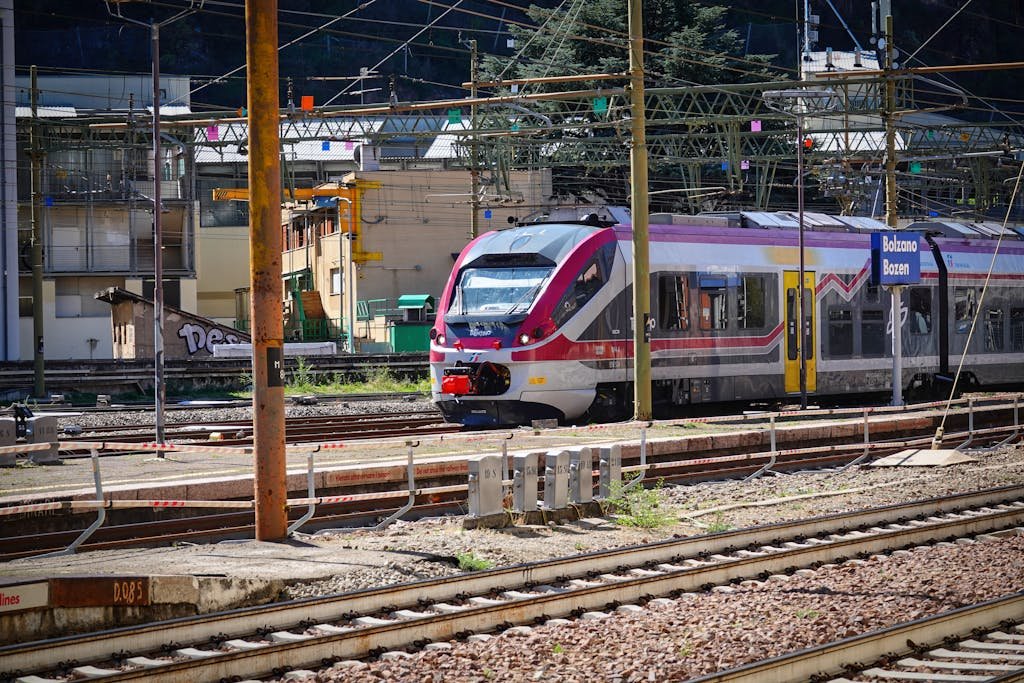
There are two companies running high-speed trains in Italy. Both are good, and there’s little between them in terms of routes, speeds or prices.
Trenitalia (state-owned)
Trenitalia is Italy’s national rail operator and runs the Frecciarossa (the fastest, up to 300 km/h), Frecciargento and Frecciabianca services – collectively known as Le Frecce (“The Arrows”). They also run all regional and local trains.
Frecciarossa trains have four classes: Standard, Premium, Business and Executive. For most travellers, Standard is perfectly fine: comfortable seats, power sockets, Wi-Fi. Premium gives you a bit more legroom and a snack. Business and Executive are worth it if you spot a deal, but aren’t necessary.
Trenitalia also run Intercity trains, which are slower than the Frecce but still cover long distances. They stop at more stations and are a bit cheaper.
Italo (privately owned)
Italo launched in 2012 as Italy’s first private high-speed operator and now has about a 35% market share on high-speed routes. Their trains are sleek, modern, and carpeted throughout with leather seats in all classes (they’ve been nicknamed the “Ferrari trains”).
Italo has three classes: Smart (equivalent to Standard), Comfort (more legroom, quieter), and Prima (their premium offering with at-seat service). There’s also a Club Executive for small groups wanting a private compartment. Smart is fine, unless you spot a cheap upgrade.
Italo trains run hourly on the main Milan–Florence–Rome–Naples corridor and also serve Venice, Bologna, Turin, Verona, and Salerno.
Which should you choose?
We’ve used both and wouldn’t hesitate to book either. The practical answer is: book whichever has the better time or price for your journey. Use Omio or Trainline to compare both operators side by side.
A few small differences worth knowing:
- Italo only runs high-speed routes between major cities. If you need regional or local trains (e.g. to Pompeii, Cinque Terre, or small Tuscan towns), you’ll need Trenitalia.
- Interrail and Eurail passes cover Trenitalia but not Italo. If you’re using a rail pass, you’re limited to Trenitalia (plus a €13 reservation fee for high-speed trains).
- Child policies differ slightly. Under-4s travel free on Trenitalia (without their own seat), but only under-3s on Italo. Under-15s get child fares on Trenitalia; under-14s on Italo.
If you’re planning a day trip to Pompeii from Naples, the Circumvesuviana isn’t covered by Trenitalia or Italo. Our guide to getting from Naples to Pompeii covers this route specifically.
Regional and local trains
Not everything in Italy is connected by high-speed rail. For smaller towns, coastal areas and local routes, you’ll use Trenitalia’s regional trains (Regionale and Regionale Veloce).
These are slower, make more stops, and are basic compared to the Frecce, but they’re cheap, frequent, and don’t require advance booking. You can buy a ticket on the day and hop on.
Some routes you’ll likely use regional trains for:
- Naples to Pompeii (Circumvesuviana line – we have a full guide to this route)
- Pisa to Lucca (around 30 minutes, €4–5)
- La Spezia to the Cinque Terre villages (5–20 minutes between each village)
- Florence to Siena (around 1.5 hours, with a change at Empoli)
- Bologna to Parma or Modena (quick hops of 30–60 minutes)
Important: if you have a paper regional ticket, you must validate it using the green or yellow machines on the platform before you board. If you don’t, your ticket is considered invalid and you can be fined. Tickets bought online or via an app are typically pre-validated for a specific time, so this doesn’t apply to e-tickets.
How to buy train tickets (and save money)
There are several ways to buy Italian train tickets. Here’s what we’d recommend and what we’ve used ourselves.
Where to book
Omio: Our go to. Similar to Trainline but also shows buses and other transport options, which is handy for comparing. It’s in English and has an app. There’s a small booking fee (they round prices up slightly).
Trainline: Shows both Trenitalia and Italo results in one search, in English, with clear pricing. Small booking fee. You can use English place names (Venice, Florence, Naples) rather than the Italian versions. E-tickets are stored in the app.
Trenitalia direct: No booking fee, but you need to use Italian place names (Venezia, Firenze, Napoli), the translations can be quirky, and international credit cards don’t always work. Fine if you’re comfortable with it. Bear in mind you can’t compare Trenitalia and Italo against each other.
Italo direct: Similar to Trenitalia direct, there’s no booking fee but it’s a less smooth experience (and you won’t be able to compare against Trenitalia services).
At the station: Self-service machines are available at all major stations. Green machines are Trenitalia, red machines are Italo. You can also buy from staffed ticket counters, though queues can be long in peak season.
For high-speed and intercity trains, we’d recommend booking through or Omio or Trainline for simplicity. For regional trains, you can usually just buy at the station on the day.
How to save money
Book early. This is the single biggest thing you can do. High-speed fares are dynamic – the cheapest tickets (Trenitalia’s “Super Economy” or Italo’s “Low Cost”) sell out first. Booking 2–3 months ahead can easily save you 50% or more. A Rome to Florence ticket might cost €19 booked early versus €50+ on the day.
Be flexible with times. The first and last trains of the day, and those around lunchtime, are often cheaper than peak-hour departures (7–9am, 5–7pm).
Use regional trains for short hops. Regional fares are fixed by distance, so there’s no price advantage to booking early, however they’re very cheap. A regional train from Pisa to Lucca costs €4–5 regardless of when you buy.
Compare Trenitalia and Italo. On the same route at the same time, one might be significantly cheaper than the other. Comparing on Omio takes seconds.
Consider an Interrail or Eurail pass (maybe). Passes cover all Trenitalia trains (not Italo) and can save money if you’re taking four or more long-distance trains. Factor in the €13 reservation fee per high-speed journey. For most trips of 10 days or fewer hitting 2–3 cities, individual tickets booked early will probably work out cheaper.
The cheapest tickets are non-refundable. Super Economy and Low Cost fares can’t be changed or refunded. If your plans might shift, consider spending a few euros more on an Economy or Base fare that allows changes.
Key routes and journey times
Here are the routes you’re most likely to use, with approximate times and typical prices when booked in advance.
| Route | Train type | Journey time | Price (booked early) |
|---|---|---|---|
| Rome > Florence | High-speed (Frecciarossa / Italo) | 1h 30m | €19–35 |
| Rome > Naples | High-speed | 1h 10m | €19–30 |
| Rome > Venice | High-speed | 3h 45m | €30–55 |
| Rome > Milan | High-speed | 3h | €30–50 |
| Florence > Venice | High-speed | 2h | €20–40 |
| Florence > Bologna | High-speed | 35m | €15–25 |
| Milan > Venice | High-speed | 2h 30m | €19–35 |
| Milan > Florence | High-speed | 1h 45m | €20–40 |
| Naples > Pompeii | Regional (Circumvesuviana) | 35–40m | €3–4 |
| Florence > Pisa | Regional | 1h | €9 |
| La Spezia > Cinque Terre | Regional | 5–20m per village | €5 |
Tip: These prices are for Standard/Smart class. Booking 2–3 months ahead usually gets you the lowest fares. Prices roughly double if you book on the day.
If you’re following our 10-day Italy itinerary, the three main train journeys (Rome > Florence > Venice) will cost around €60–90 total if booked in advance.
What to expect on board
High-speed trains
High-speed trains in Italy are genuinely good. We were impressed the first time we used them and they’ve been reliable on every trip since.
Seats are assigned when you book (you can usually choose your seat on the app or website for a small fee). There’s overhead luggage storage and space between carriages for larger bags. Air conditioning is standard, and most seats have power sockets (though we’d recommend bringing a portable charger if you’re reliant on using them).
Wi-Fi is available but can be patchy, especially in tunnels (the Florence–Bologna route has a lot of them). Don’t rely on it for anything critical.
Both Trenitalia and Italo have cafe cars or vending machines on board. Trenitalia’s Frecciarossa has a staffed bar car; Italo has self-service coffee and snack machines. You can also bring your own food (picking up a panino and a coffee at the station before boarding is a very Italian thing to do).
Journeys are smooth and quiet. You can read, work, nap, or just watch Tuscany roll past the window. It’s one of the nicest ways to travel between cities.
Regional trains
Regional trains are more basic with no assigned seats or cafe car, and the condition varies. Some are modern and clean, others are older and a bit tired. They’re fine for shorter journeys, but we wouldn’t want to spend three hours on one.
They can get crowded during commuter hours (7–9am, 5–7pm) and around school finishing times. If you’re travelling at these times, be prepared to stand. Outside of rush hour, you’ll usually get a seat without any trouble.
The Circumvesuviana line from Naples to Pompeii and Sorrento is a particular case, as it’s functional but not comfortable, especially in summer without air conditioning. It does the job, but if you want more comfort, the Campania Express (a tourist-oriented train on the same route, running in high season) is worth the upgrade. We’ve covered all the options in our Naples to Pompeii guide.
Tips for travelling by train in Italy
A few things we learnt along the way:
Validate paper tickets. If you buy a regional ticket at a station or a tabacchi (newsagent), you must stamp it in the green or yellow machine on the platform before boarding. E-tickets and app tickets don’t need validating. Getting this wrong can mean a €50 fine.
Arrive 15–20 minutes early at big stations. Roma Termini, Milano Centrale and Firenze SMN are large and busy. Platforms (binari) are displayed on overhead screens but can change at the last minute. Make sure you leave enough time to find the right station (and pick up a coffee).
Check your station name. Many cities have multiple stations. Venice has Venezia Santa Lucia (it’s on the island and the one you want) and Venezia Mestre (on the mainland). Naples has Napoli Centrale and Napoli Garibaldi (they’re connected, but it’s confusing the first time). Make sure you know which station your train departs from and arrives at.
Download the Trenitalia and Italo apps. Even if you book through Trainline or Omio, the operator apps show real-time platform information, delays and updates. We found them useful.
Keep your ticket accessible. Conductors check tickets on all trains. On high-speed trains, they scan QR codes from your phone or printed ticket.
Don’t leave luggage unattended. Petty theft on trains is uncommon but not unheard of, especially on regional trains around Naples and Rome. Keep your bags where you can see them.
Book a seat in the quiet zone if you want peace. Both Trenitalia and Italo offer quiet carriages (silenzio/quiet zone) where phone calls and loud conversations are discouraged. Worth it on longer journeys, and you can usually select it when booking.
Use station luggage storage if needed. If you arrive early and want to explore before check-in, most major stations have luggage storage (deposito bagagli) for around €6–7 per bag for the first 5 hours. Especially useful if you want to break a journey up and stop for the day somewhere nice.
What about regional passes?
A few regional travel passes can save money if you’re spending time in one area.
Cinque Terre Card: Includes access to hiking trails and shuttle buses. The Cinque Terre Train Card (from €19.50–32.50 per day depending on season) adds unlimited regional train travel between the five villages and La Spezia.
Campania Artecard: Covers public transport in the Campania region (including Naples and Pompeii) plus free or discounted entry to museums and archaeological sites. A 3-day pass costs around €25–40 depending on the variant. It’s good value if you’re doing Naples, Pompeii and Herculaneum.
Toscana Regional Pass: Allows unlimited travel on regional trains across Tuscany. A 3-day pass costs around €45. It’s worth it if you’re making multiple day trips from Florence (Siena, Pisa, Lucca etc.).
When a train isn’t the best option
Trains are brilliant for getting between cities, but there’s a few places where you’ll need an alternative.
The Amalfi Coast. There’s no train along the Amalfi Coast itself. You can get to Sorrento by train (Circumvesuviana from Naples), but after that it’s buses, boats or a car. The SITA bus along the coast is scenic but slow, and gets rammed in summer.
Rural Tuscany. If you want to explore the Chianti wine region, Val d’Orcia, or smaller hill towns like Montepulciano or Pienza, you’ll need a car. Trains don’t reach these areas. Discover Cars is what we use to compare rental prices. Alternatively, a guided wine tour from Florence takes the driving out of the equation entirely.
Sicily and Sardinia. Both islands have train networks, but they’re slower and less frequent than the mainland. Buses or car hire are often more practical for getting around the islands themselves (though you can reach Sicily by train from the mainland via the Messina Strait ferry crossing, which is an experience in itself).
Very small towns. Some beautiful places – Matera, Alberobello, many Umbrian hill towns – aren’t on a train line, or are only reachable with infrequent regional connections and a bus. Check journey times before assuming the train is the best option.
Frequently asked questions
What’s next?
Italy’s train network makes it genuinely easy to see a lot of the country without needing a car. Once you’ve done it once, you’ll wonder why you ever considered driving.
The key is booking high-speed tickets early, using regional trains for the short hops, and giving yourself a bit of buffer time at busy stations. Beyond that, it’s one of the most relaxed and scenic ways to travel.
🚆 See our 10-day Italy itinerary by train for a ready-made route
🚆 Trying to save money on your trip? We’ve got a full budget guide
🚆 Heading south? Here’s how to get from Naples to Pompeii
🚆 Fancy a day in the Tuscan countryside? Check out our 10 best wine tours from Florence
🚆 Or, explore all our Italy travel guides which covers everything in one place.
A small favour: we're trying to gather some feedback to help make our blog even better
If you have any feedback on how we can improve, please add it below. Big or small, we'd love to hear.