The best 4-Day Rome Itinerary 2026: A Relaxed Day-by-Day Guide
This page contains affiliate links. If you make a purchase through one of these links we make a small commission to help run this site, at no cost to you. Making a commission never affects the advice we give - see our content policy.
Rome is one of those cities where the hardest part isn’t what to see – it’s what to leave out. Four days sounds generous until you open a map and realise everything you’ve ever heard of is apparently “unmissable”.
It’s a brilliant city to visit – but it’s big, and there’s a lot to do.
We’ve visited twice now, and the trip that worked best wasn’t the one where we crammed everything in but where we slowed down.
This 4-day Rome itinerary is built around what actually worked for us: a few anchor sights each day, grouped by area so you’re not zigzagging across the city, with space left over to wander, eat, and just enjoy being in Rome.
Here’s the structure at a glance:
- Day 1: Ancient Rome – Colosseum, Roman Forum, Palatine Hill, then the Monti neighbourhood
- Day 2: The Vatican Museums, Sistine Chapel, and St Peter’s, then Trastevere for the evening
- Day 3: Historic centre on foot – Pantheon, Trevi Fountain, Piazza Navona, local neighbourhoods
- Day 4: Your choice – Appian Way, Ostia Antica, or Testaccio
We front-loaded the busiest sights, kept the historic centre to one walkable day, and left the final day flexible. It’s the version we’d repeat ourselves, and it’s also shaped by what we’d now skip.
Mapping the sights
We’ve mapped our suggested sights below, with each day a different colour (you’ll do a lot of walking, so it helps to keep the sites clustered together). The Google Maps app (and Citymapper, if you’re taking public transport) will help navigate between them when you’re in the city.
Quick facts for planning 4 days in Rome
- Best for: First-time visitors who want the highlights without burnout
- Walking: Expect 15,000–20,000 steps per day on days 1–3
- Budget tip: Free entry at the Colosseum on the first Sunday of each month, and at the Vatican Museums on the last Sunday
- Getting around: Most of this itinerary is walkable; day 4 options need Metro and bus or train
- Book ahead: Colosseum and Vatican Museums tickets sell out so book at least 2 weeks in advance
If this is your first trip to Italy, our guide to the best places to visit first helps you decide where else to go. Our guide to the best places to stay in Rome outside the tourist trail will help you find places which are cheaper, more authentic, and generally better.
Day 1: Ancient Rome: Colosseum, Forum & Palatine Hill
We started with the Colosseum, Roman Forum, and Palatine Hill as a single morning plan. They sit next to each other and draw the largest crowds anywhere in the city. Splitting them across multiple days usually means repeating security and queues.
The Colosseum
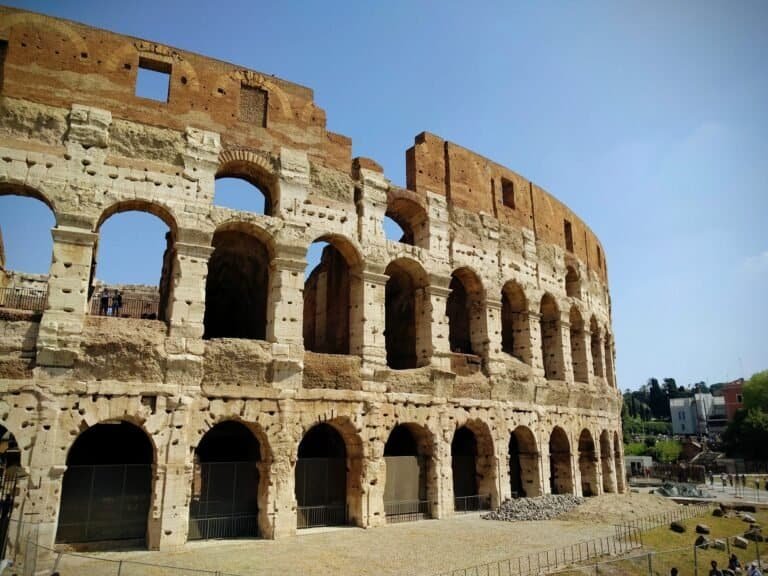
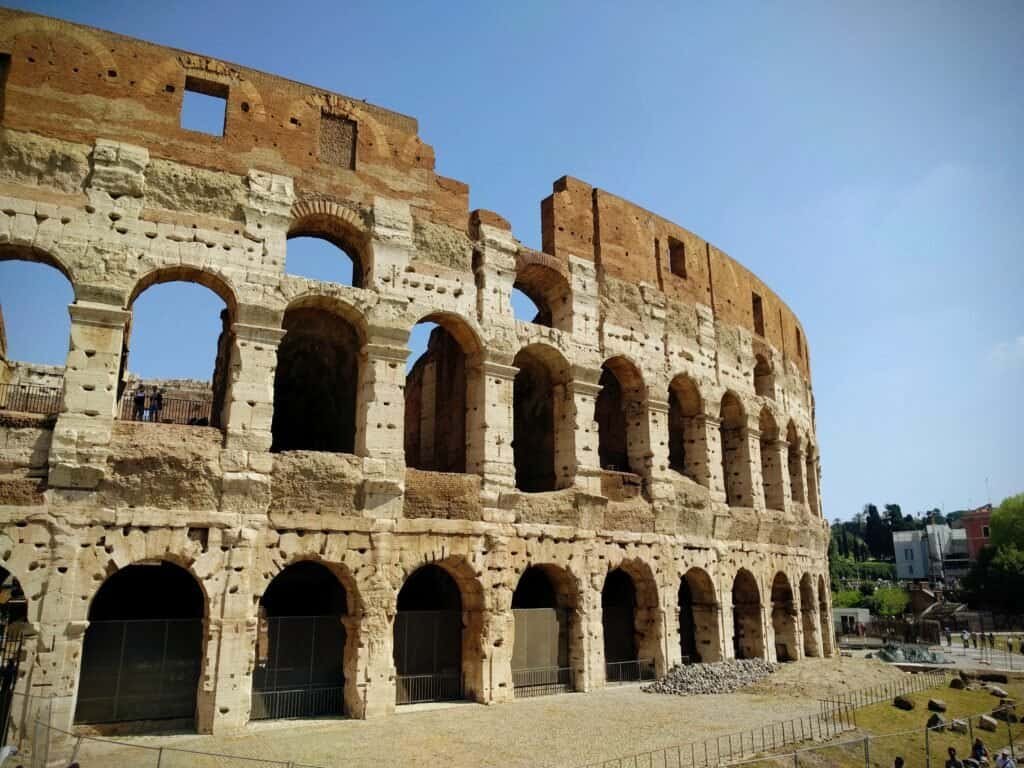
The Colosseum is the most immediately recognisable site, and the visit is focused on the structure itself rather than exhibits. You move through the seating levels, looking down into the arena and across the interior, which helps make sense of its scale and layout.
We arrived at the Colosseum just before 8:30am opening, and were one of the first people to enter. We’d definitely recommend this – there weren’t any queues, and we were one of the few people in the whole place. By the time we left, it was far busier.
Make sure you purchase a ticket in advance (they get booked up). There’s free entry on the first Sunday of every month as part of Italy’s Domenica al Museo (Free Sunday) initiative – but expect it to be even busier than normal.
A guided tour makes a real difference here. Ours covered the Colosseum, Roman Forum, and Palatine Hill in one morning, and the guide brought the ruins to life in a way we wouldn’t have got from an audio guide. We booked this skip-the-line tour through GetYourGuide and it was worth it, especially for avoiding the main entrance queue.
From the Colosseum entrance, it’s only a few minutes’ walk to the Roman Forum.
The Roman Forum and Palatine Hill
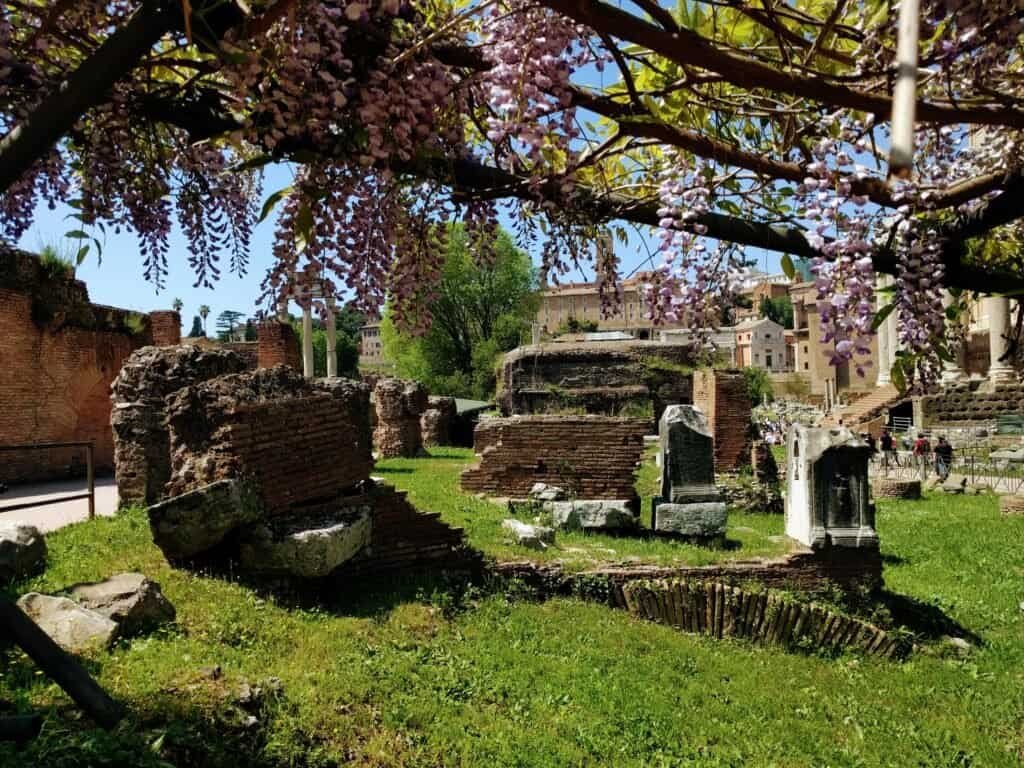
The Roman Forum is a long, open area rather than a single monument. You walk through the remains of temples, arches, and civic buildings that once made up the centre of public life in ancient Rome. It works best as a continuous walk from one end to the other instead of a series of individual stops.
The Roman Forum is roughly 600 meters from end to end so is manageable on foot. Paths are well signposted, but uneven in places, so decent shoes help.
The route then rises up onto Palatine Hill, which sits directly above the Forum and is reached in a matter of minutes on foot. This area contains the ruins of imperial palaces and feels more open and less crowded. It’s a good place to slow down, take in views over the Forum and Circus Maximus, and spend more time lingering before leaving the archaeological area.
Afternoon: exploring the Monti neighbourhood
By early afternoon we were done with major sights and moved into Monti, the nearby neighbourhood. It’s known for its village‑like streets, independent shops, and low‑key bars clustered around small piazzas. It’s close enough to reach on foot, but calmer: small streets, casual places to eat, and a local feel. We kept the rest of the day loose (late lunch, wander, dinner nearby) and didn’t add another “big ticket” stop.
Eating near tourist sites in Rome is a lot more expensive – our Italy budget guide breaks down where it’s worth spending and where to save.
There are other neighbourhoods worth exploring around here too, such as Celio, which is quieter and greener with residential streets near the Colosseum, or San Giovanni, which feels more local and sits just beyond the main tourist zone.
If you’re trying to keep costs sensible in Rome, our Italy travel budgeting guide breaks down what’s worth paying for and where we saved without feeling like we were missing out.
Where to stay in Rome
For this itinerary, we recommend staying in or near Monti, Trastevere, or the Centro Storico. Monti puts you closest to day 1’s sights and has a great evening atmosphere. Trastevere is livelier at night and feels less touristy. The Centro Storico is most central for day 3’s walking route. All three are well-connected by bus or metro for day 4.
Search Rome hotels on Booking.com – we usually filter by “8.0+ rating” and “free cancellation” to keep options flexible.
Day 2: The Vatican, Sistine Chapel and Trastevere
This is the busiest day of the itinerary, so we deliberately paired a heavy morning with a loose, neighbourhood-led afternoon.
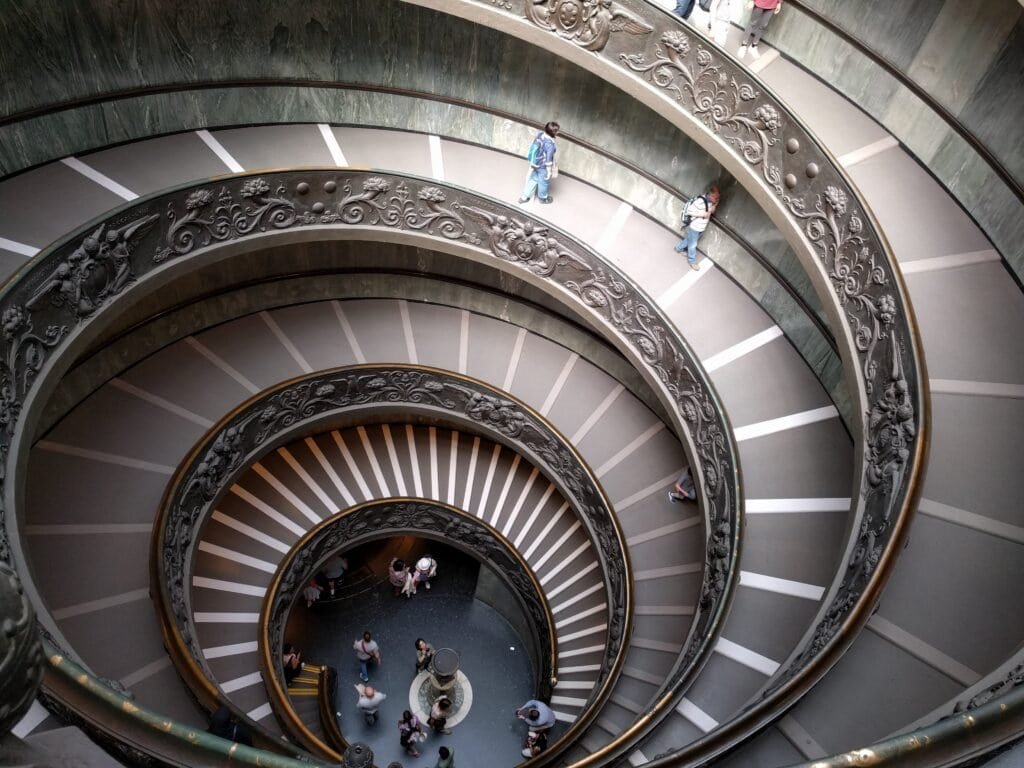
The Vatican Museums
We booked the Vatican Museums for the morning. The museums operate as a one-way route through multiple collections, ending at the Sistine Chapel, rather than letting you wander freely between galleries.
As you move through, you’ll pass rooms of Roman and Greek sculpture – statues, busts, and fragments collected over centuries – followed by grand decorated rooms covered in Renaissance frescoes. One of the most distinctive sections is the Gallery of Maps, a long corridor lined with hand‑painted 16th‑century maps showing how Italy was understood at the time.
The sheer volume can feel relentless, so allow around 2–3 hours for the Vatican Museums and slow down only where you find something interesting (don’t try and see/read everything, or you’ll never leave). Going early reduces the feeling of being funnelled along, as it will get busy.
The Vatican Museums offer free entry on the last Sunday of every month from 09:00 to 14:00 (last entry typically around 12:30). That includes access to the Sistine Chapel as part of the museum route – but be aware it gets extremely busy on these days and skip-the-line booking isn’t available.
Just don’t forget to book your ticket regardless of when you go. If you want to skip the often-enormous queue, book a skip-the-line Vatican Museums entry on GetYourGuide: the standard queue can easily be 1–2 hours on busy days, and this was one booking where paying a bit extra was absolutely worth it.
The Sistine Chapel
The route ends at the Sistine Chapel, the rectangular chapel used for papal conclaves. The ceiling (Michelangelo) depicts scenes from Genesis, including The Creation of Adam, which you’ll recognise straight away.
It gets very crowded – you’ll queue to get into the chapel, and once in, will almost be shoulder to shoulder. This bit made us laugh – it will get pretty noisy until security shouts ‘silencio! no photo, no video’. The noise will drop for a few minutes until it builds up and ‘silencio…’!
From there, you’ll head onto St Peter’s Basilica. There are two ways to get there:
- Standard route (assume this): exit the Vatican Museums completely, walk outside around the Vatican walls, and enter St Peter’s via St Peter’s Square. This is what most individual ticket holders will do and what we planned for. Just follow the route on Google Maps until you see the queue for the basilica.
- Internal passage (don’t rely on it): there is sometimes an internal route from the Sistine Chapel area directly into the basilica. It’s usually used by guided tours and isn’t reliably available to individual visitors, so we didn’t build the day around it. It’s a bonus if you can do it.
You might want to stop for a coffee or lunch along the way. If you do, it’s worth walking a block or two away and finding somewhere cheaper and better: it’s a touristy area and there’s a lot of low quality places nearby.
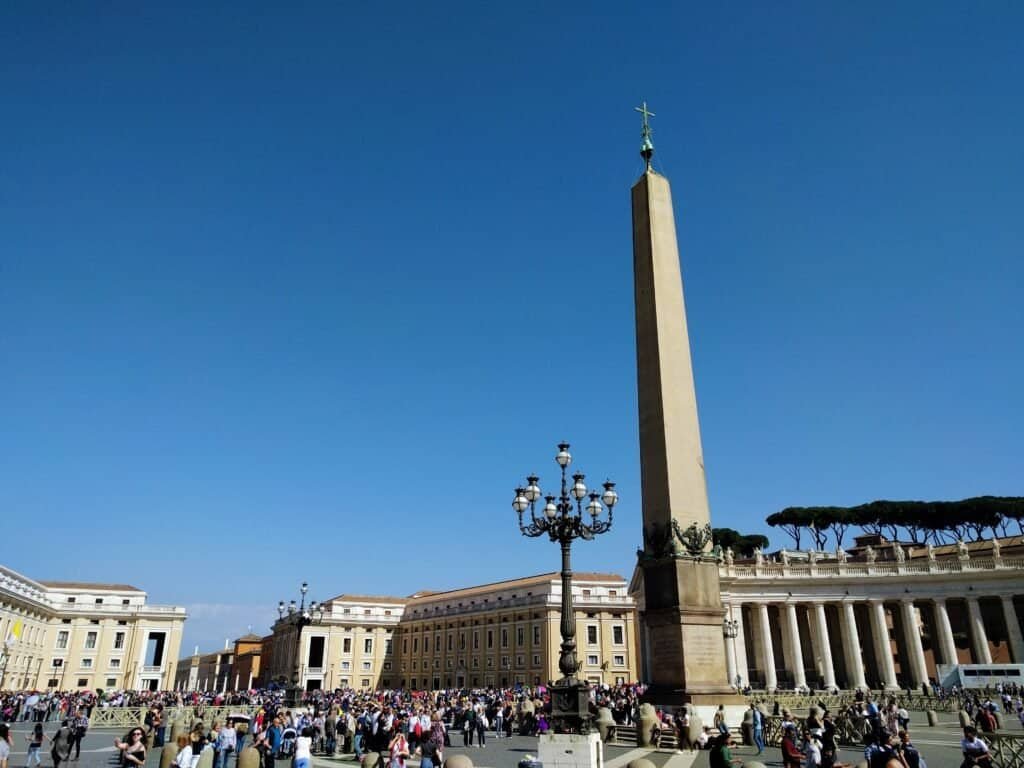
St Peter’s Basilica and Square
St Peter’s Basilica is free to enter but has airport-style security. Queues are shortest before 9am or around 3–4pm. If you head straight from the Vatican Museums, expect a wait (we found that it’s often better to grab lunch elsewhere and return mid-afternoon).
Inside the Basilica, the emphasis is scale: a long central nave, a huge dome, and side chapels containing sculptures and tombs, including Michelangelo’s Pietà.
Wandering round and sitting in the square is also an activity in itself. There’s often events on involving various cardinals. If so, you might want to stop and watch whatever’s happening, but bear in mind that although there might be activity and people sitting waiting, it might still be several hours before anything interesting happens.
Exploring Trastevere
In the afternoon, we crossed the river into Trastevere. It’s more residential than monumental, with narrow streets, small squares, and a slightly chaotic layout. You’ll see everyday shops mixed in with bars and restaurants, laundry hanging overhead, and people chatting and meeting in the squares.
This is a good area to slow down. We didn’t aim for specific sights, but wandered side streets, cut through small piazzas, and stopped whenever we saw something interesting.
It’s also a good place to eat – menus tend to be more traditional, and restaurants are quite informal. We stayed local for the evening rather than heading back across the river, as there’s a lot of nice places to settle into.
When to go to Rome
Rome is best in April–May or September–October, when temperatures are comfortable for walking and crowds are lighter than peak summer.
July and August are hot (35°C+) and the busiest months.
We visited in late February and had mild weather with noticeably fewer tourists – an underrated option if you don’t mind cooler evenings. For more on timing and flight prices, see our guide to the best time to fly to Italy.
Day 3: Rome’s historic centre on foot
We spent this day almost entirely on foot, moving through the historic centre in a loose loop. The point was to see the well-known places, but not to make the day too packed.
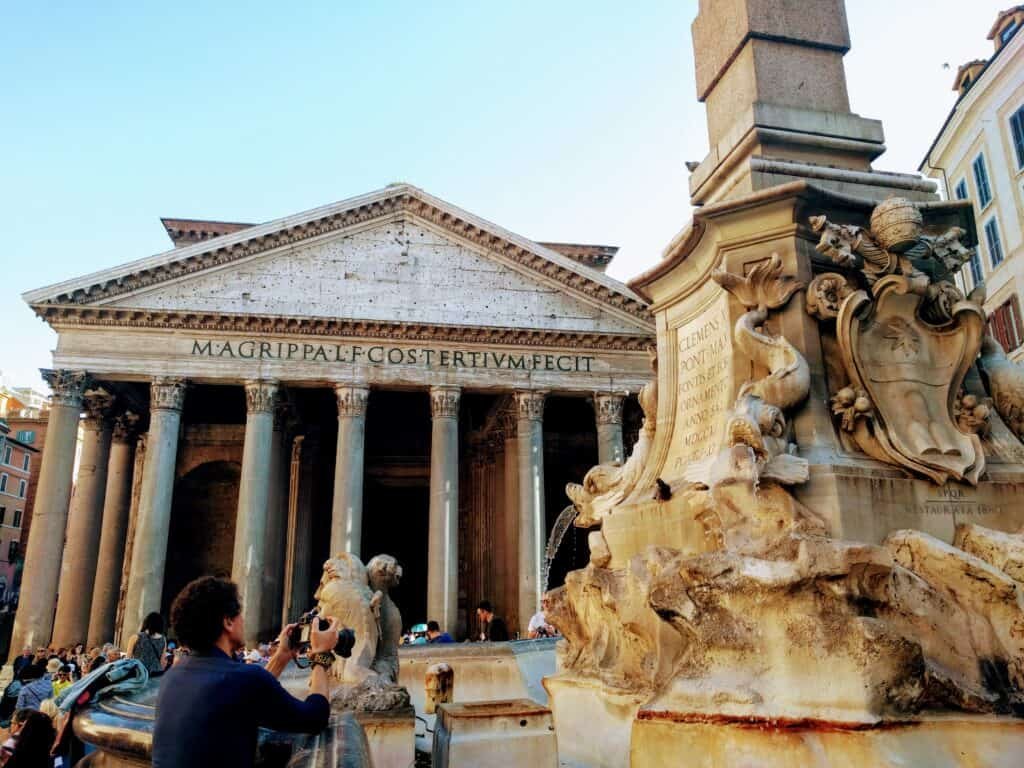
The Pantheon and Piazza Navona
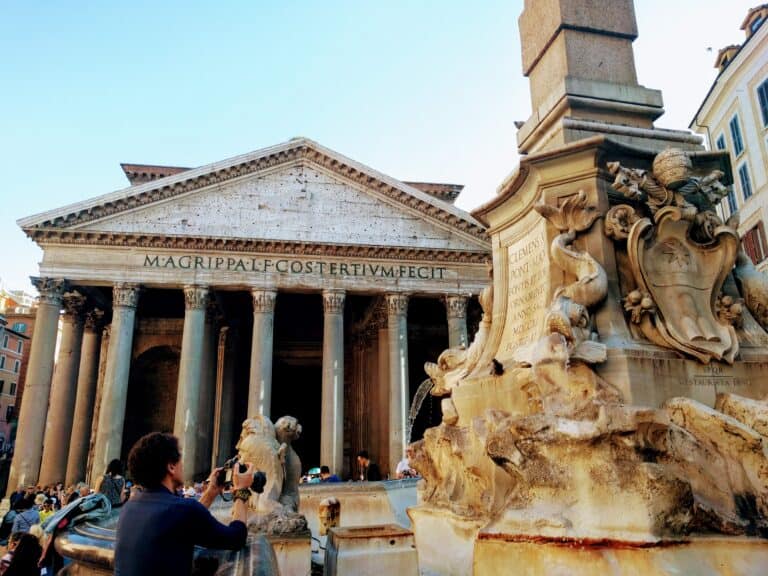
We started at the Pantheon. Originally built as a Roman temple and later converted into a church, it’s best known for its huge dome and the circular opening at the top (the oculus). It’s worth stepping inside even briefly to look up at how the dome is built and how the light shifts. The perfectness of the circular space is pretty amazing, and the fact that it has lasted almost 2000 years.
Entry is ticketed on most days and early morning queues are usually the easiest.
From there, we walked through Piazza Navona. The square follows the outline of an ancient Roman stadium, which explains its long, narrow shape and why it feels more like a thoroughfare than a place to stop. As you walk through, you’ll see three large fountains, including Bernini’s Fountain of the Four Rivers at the centre, with churches and palazzi lining the edges.
It’s one of the busiest spots in the historic centre, and the cafés lining the square charge accordingly (and aren’t very good). We’d treat it as a walk-through rather than a stop – duck into a side street if you want to sit down, where prices drop and the atmosphere improves immediately.
The Trevi Fountain
Next was the Trevi Fountain. It’s a large Baroque fountain built into the side of a palazzo, fed by an ancient aqueduct that still supplies water today. The central figure is Oceanus, set into a dramatic stone backdrop, with water flowing down into the pool below.
It’s a bit of a tourist trap, in that it’s one of those places you go because everyone goes there. But, it’s worth seeing in person because of the scale and detail: it’s much larger and louder than it tends to look in photos. The tradition is to throw a coin over your right shoulder into the water, which is why the area around the basin is always crowded.
Midday, it’s often shoulder‑to‑shoulder and hard to see anything beyond the crowd. Early morning (before around 8–9am) or later in the evening, after dinner, is calmer. If you arrive during peak hours, a brief stop works better than waiting around for space.
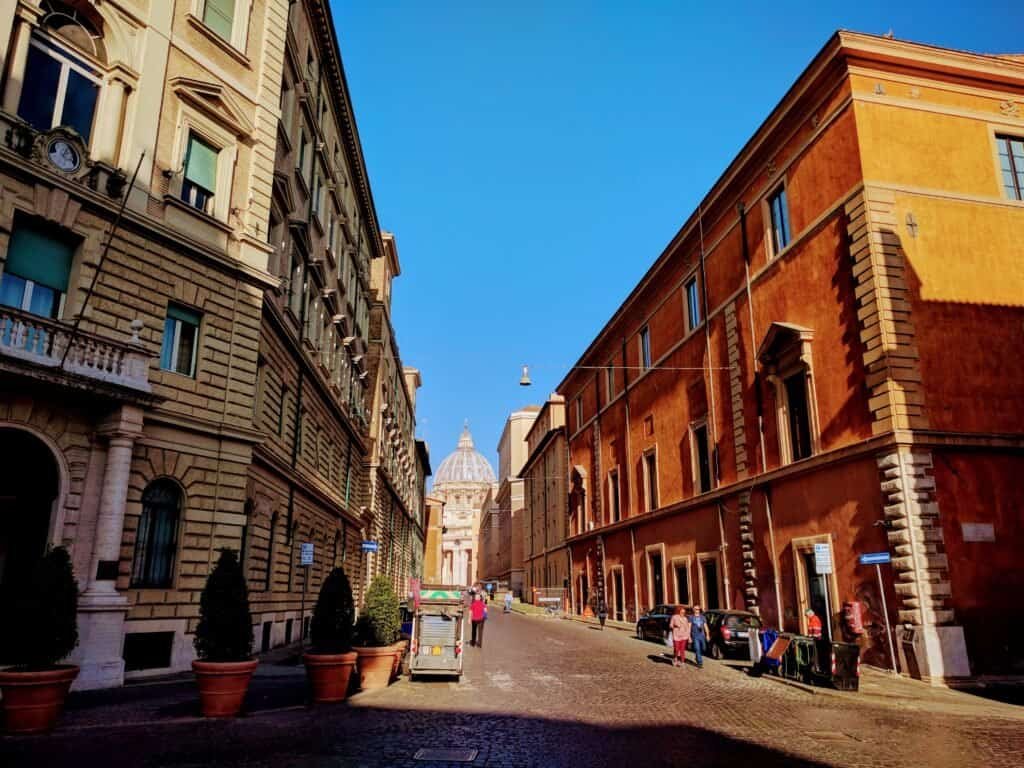
Afternoon: neighbourhoods walks – Campo de’ Fiori, Piazza Farnese and beyond
We broke the day up with a long lunch and coffee rather than pushing on continuously. In the afternoon, we wandered more loosely, focusing on areas rather than specific sights:
- Campo de’ Fiori → Piazza Farnese: This stretch is lively and central, centred around one of Rome’s busiest squares. Campo de’ Fiori itself is known for its daytime market and busy evening atmosphere, while Piazza Farnese is calmer and more residential, framed by large Renaissance palazzi. It’s a good area to wander without a plan, dipping into side streets where things quieten down quickly.
- Pantheon → Piazza Venezia: This route takes you through narrower streets and smaller lanes that feel less performative than the main squares. You’ll pass small churches, bookshops, and cafés that work well for short stops, making it a good option if you want to keep walking but not rush.
Optional extra: the Jewish Ghetto
If you want an extra historic-centre stop that fits into the day, the Jewish Ghetto is a good choice. This is one of the oldest Jewish neighbourhoods in Europe, centred around the Portico of Octavia and the Great Synagogue. You’ll see quieter streets, distinctive Roman-Jewish food traditions, and a more lived-in atmosphere than the main tourist loop. It works particularly well in the early evening, when it’s busy enough to feel alive but not overcrowded, and it’s a good place to stop for dinner.
Rough costs for 4 days in Rome (per person, mid-range)
Expect around £80–120/night for a decent hotel or apartment, £15–25/day for food if you mix trattorias with market lunches, and £40–60 total for entry tickets (Colosseum and Vatican).
Public transport is cheap – a 72-hour pass costs around €18. For a full breakdown, see our Italy budget guide.
Day 4: Beyond Central Rome: Appian Way, Ostia Antica or Testaccio
By day four, we wanted to leave the hustle and bustle of central Rome and explore further afield. We found three options that we’d recommend.
If you want space and walking, choose the Appian Way. If you want more archaeology without the crowds, choose Ostia Antica. If you’ve most enjoyed eating, wandering, and seeing everyday Rome, choose Testaccio.
Option 1: Appian Way (Via Appia Antica)
The Appian Way is one of the oldest Roman roads, originally built to connect Rome with southern Italy. Today, a long stretch of it runs through parkland on the south‑east edge of the city, with original basalt paving stones still visible underfoot. Once you’re past the initial busy road, traffic drops away and it feels noticeably quieter and more open than the historic centre.
You’ll see sections of the original road, fragments of tombs and ruins lining the edges, and entrances to catacombs cut into the surrounding land. It’s not a single headline sight so much as a landscape you move through, which makes it a good contrast to Rome’s denser days. It’s worth visiting if you want space, fresh air, and a sense of how Rome extends beyond its central monuments.
Getting there: the easiest option is public transport. From the centre, take the Metro Line A to San Giovanni, then change to bus 218, which drops you close to the Appian Way. Journey time is roughly 30–40 minutes in total. Tickets are standard Rome public transport tickets: you can use a contactless card, phone payment, or the same ticket you’d use for buses and metro elsewhere in the city.
If you’re planning to use public transport across multiple days, a Roma 72-hour travel pass covers metro, buses, and trams and usually pays for itself by day 2.
Once there, you can walk, but hiring bikes near the entrance makes it easier to cover more ground without it becoming tiring, especially on the uneven stone surface. Most people spend half a day here: walk or cycle a section, stop when it’s interesting, then turn back rather than trying to cover the entire route.
Option 2: Ostia Antica
Ostia Antica was Rome’s port city, and today it’s one of the easiest places to see how an ancient Roman town actually functioned. Instead of one dominant monument, the site is laid out with streets, apartment blocks, warehouses, bath complexes, temples, and public buildings still clearly defined. You’ll walk along old roads, step into multi-storey housing blocks, and see mosaics and wall remains that give a strong sense of everyday life.
The site is large but not overwhelming, and it’s easy to explore at your own pace without being funnelled or rushed.
If you’d rather have context as you explore, this half-day guided tour to Ostia Antica includes transport from central Rome and a guide who explains what you’re looking at – useful given how spread out the site is.
Getting there: take the Roma–Lido train from Piramide station (connected to Metro Line B) or Porta San Paolo. Trains run frequently, and the journey takes around 30 minutes. Get off at Ostia Antica station, then walk about 5–10 minutes to the entrance. Standard Rome public transport tickets work for this line: you can tap contactless, use a travel card, or buy a single ticket at the station.
Allow 4–5 hours total including the 30-minute train each way. Wear comfortable shoes, bring water in warmer months, and don’t feel like you have to cover the entire site.
Ostia Antica reminded us of Pompeii, which we visited from Naples. Here’s how to get from Naples to Pompeii if you’re continuing south.
Option 3: Testaccio
Testaccio is a working residential neighbourhood with a strong food culture and very little in the way of headline sights. Historically, it developed around Rome’s old slaughterhouses, which is why it’s still associated with traditional Roman cooking. What you’ll see here is everyday Rome: apartment blocks, local shops, bakeries, bars, and streets that aren’t organised around visitors.
The main focus is Testaccio Market, a modern indoor market with stalls selling fresh produce, sandwiches, and simple cooked dishes aimed at locals. Around it are straightforward trattorias, bakeries, and cafés rather than destination restaurants. It’s a good choice if eating well and wandering without a plan has been the highlight of your trip.
Getting there: Testaccio is easy to reach from the centre. Take Metro Line B to Piramide, or use buses that run south from the historic centre; travel time is usually 10–20 minutes depending on where you’re starting. The same contactless or standard Rome transport tickets apply.
This works well as a relaxed final day or half-day: arrive late morning or early afternoon, eat, wander, and stop when you’ve had enough rather than trying to structure the time.
We kept the rest of the day light: a late lunch and a last walk.
What we’d skip on a return trip
We wouldn’t queue for the Spanish Steps again – the view from the top is fine but not worth the crowds, and there’s no interior to visit.
We’d also skip eating anywhere within direct sight of a major monument; prices are higher and quality is lower. Walk two streets away and the difference is noticeable.
Frequently Asked Questions about 4 days in Rome
So, that’s our best four day itinerary for Rome
Four days in Rome is enough to see the city properly, but only if you’re selective. Grouping the busiest sights early, keeping the historic centre walkable, and leaving the final day open makes a big difference.
You’ll always leave with things still on the list, but we find it’s better to do a few things well, than skim the top of too many. And, it’s an excuse to come back again!
If you’re planning the rest of your Italy trip, check out our Italy travel budgeting guide as well as our wider content on Italy. Both help you decide where to spend time and money without overplanning.
Our guide to the best places to stay in Rome will help you find a great hotel which is outside the main tourist areas.
This Rome itinerary slots neatly into our 10-day Italy itinerary by train, which continues to Florence and Venice. Our Italy train guide has all the key routes and prices to help you plan.
And if you liked this slower itinerary, read more about the art of Slow Travel.
Did you find what you were looking for on this page?
Please let us know what we're missing, as we'd love to improve it.