Best things to do in Rome: a practical guide for 2026
This page contains affiliate links. If you make a purchase through one of these links we make a small commission to help run this site, at no cost to you. Making a commission never affects the advice we give - see our content policy.
We’ve been to Rome twice – first in 2018, again in 2025 – and we loved it both times.
The famous sights live up to their reputation, and they’re pretty incredible – Rome is a busy bustling city built on 2000 years of history. There’s a lot to see and do, which can get pretty overwhelming (and tiring!). It’s also easy to miss the best bits – hitting the main sights in great, but there’s so many small bits between them that you don’t want to miss.
This guide covers the best things to do in Rome based on what we’ve done, what we’d do again, and what we’d skip. We’ve organised it by area rather than by ranking, because Rome works much better when you explore one part of the city at a time rather than zigzagging across it. If you want this turned into a day-by-day plan, our 4-day Rome itinerary will help.
If you’re still deciding whether Rome is the right first stop, our guide to the best places to visit in Italy for first-timers might help.
Rome at a glance
We’ve plotted the sights in this one map, grouped by area like this guide is. Rome is a bit place, but if you tackle it area by area, you’ll save your feet.
The ancient city
This is where most people start, and it contains most of the big sights. The Colosseum, Roman Forum and Palatine Hill sit next to each other in the southeast of the centre, and you can visit all three on one ticket.
The Colosseum
The Colosseum is nearly 2,000 years old and held over 50,000 spectators, and the scale of it only hits you when you’re standing inside looking down at where the arena floor used to be. The scale and size of it is incredible, especially when you consider how old it is and how it’s managed to stay up for so long.
We got there before the doors opened which meant there were barely any queues and nobody inside. By the time we left an hour later, the lines outside stretched around the building (and it was also a lot hotter). We’d definitely recommend getting there for when the doors open.
A standard ticket covers the Colosseum, Roman Forum and Palatine Hill (valid for 24 hours). It doesn’t include the underground tunnels or arena floor. Those need a separate ticket and sell out fast, so book well ahead if you want them. Tickets go on sale 30 days in advance. The website can’t seem to cope with the amount of people trying to buy tickets, so open multiple tabs, refresh often, and have a lot of patience!
We didn’t get a guided tour, and wandered about on our own. It was nice, but there wasn’t much in the way of signage or information. A guide would help you learn a lot more about what you’re looking at, and what happened in each section. We recommend this one on GetYourGuide, which covers the Colosseum, Forum and Palatine Hill together. If you’d rather go solo, there are free audio guides you can pick up.
The first Sunday of every month is free entry at the Colosseum and many other state museums in Rome (Domenica al Museo). If you’re on a budget it’s worth considering, but bear in mind it gets rammed and you’ll be standing in some very long queues.
The Roman Forum and Palatine Hill
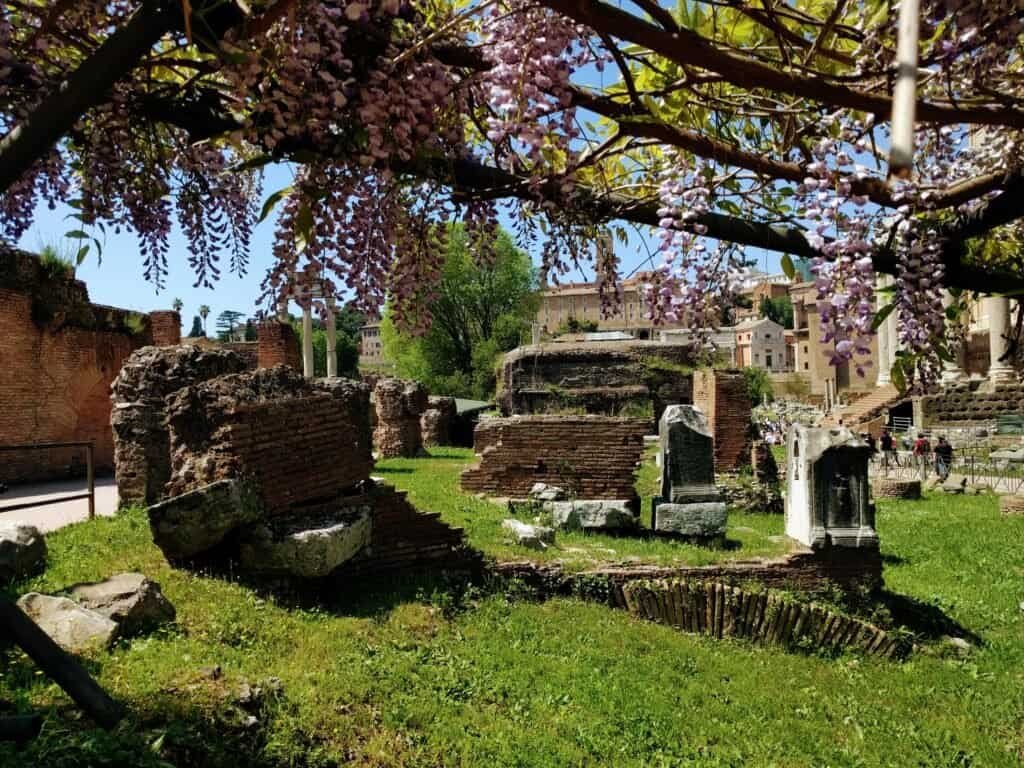
The Roman Forum is a long, open stretch of ruins that was once the political and commercial heart of the ancient city. You walk through the remains of temples, triumphal arches and senate buildings, and it all gradually reveals itself – especially if you have a guide or a decent guidebook explaining what each structure was.
From the Forum, the path rises onto Palatine Hill. This is where Romulus founded the city. It’s quieter up here, greener, and the views down over the Forum and across to the Circus Maximus are worth the climb. It’s a good place to have a rest after the Colosseum (we bought some bits from a local store and had lunch).
Allow 2–3 hours for the Forum and Palatine Hill together. There’s very little shade, so bring water and sunscreen. It can be a lot in summer, when it can hit 35°C+ and the stone radiates heat back at you.
If you’re doing all three in one morning, start with the Colosseum to avoid the crowds, then walk through the Forum, and finish on Palatine Hill where it’s calmer. You’ll avoid the crowds, and the pacing works well having the calmer Forum and Hill later (and, it avoids backtracking).
Circus Maximus
Once we’d had a break at Palatine Hill, we walked down to the Circus Maximus. It’s where ancient Romans watched chariot races, and it used to hold 250,000 spectators.
There’s not much left of the original structure – it’s mostly a long, flat green space now, with various ruins – but it’s free, open, and worth a look about. Don’t make a special trip, but if you’re coming off Palatine Hill, it’s right there.
The Vatican
Vatican City is its own country, but it’s only accessible from Rome and is normally part of any Rome itinerary. It’s an easy 20 minute walk from Piazza Navona. We spent the whole day visiting, but you could do it in a morning if you’re short on time.
Vatican Museums and the Sistine Chapel
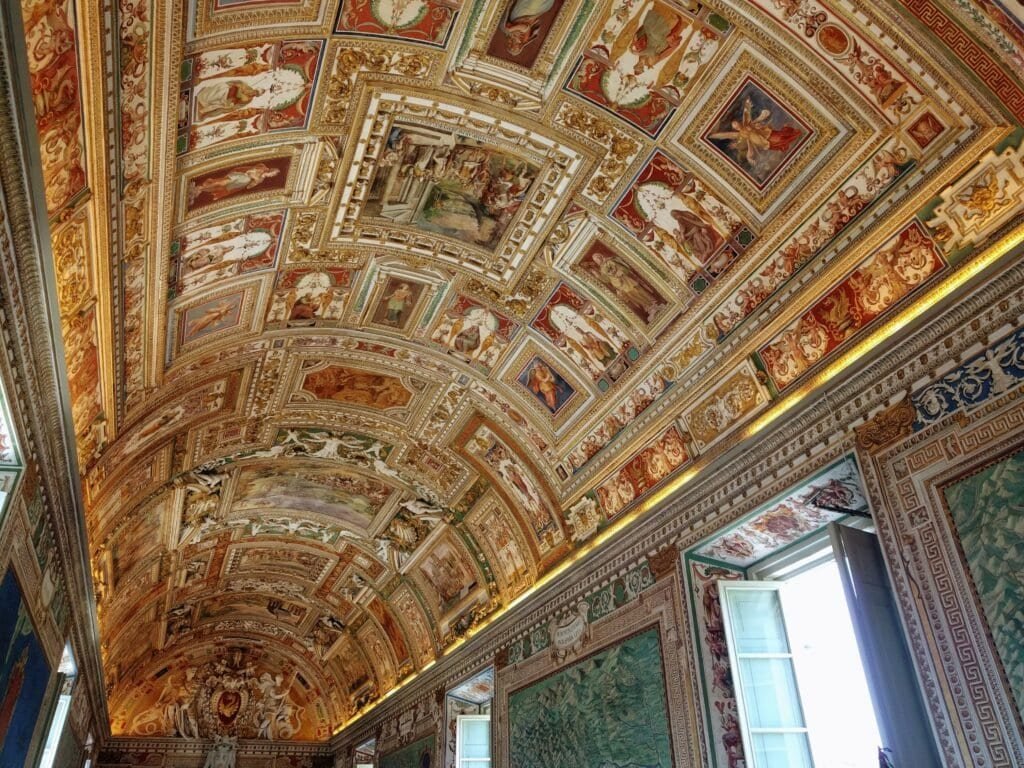
The Vatican Museums contain over 7 kilometres of galleries and centuries of art collected by the Catholic Church. You could spend days here, but most people focus on the main route: the Gallery of Maps (a long corridor of stunning 16th-century maps of Italy), the Raphael Rooms, and the Sistine Chapel at the end. Don’t try to see every gallery as there’s far too much. Pick a few things that interest you and keep an eye on the time, otherwise you’ll be exhausted and not have much time for other attractions.
We thought the Sistine Chapel was very impressive. Michelangelo’s ceiling is incredible, both the artwork and the difficulty in painting a ceiling of that size.
It’s smaller than you expect and packed with tourists, and you’re not supposed to take photos. We found the noise of the people got louder and louder until “Silencio! No foto, no video!” boomed across. It quickly went quiet until the noise gradually increased over the next few minutes until “Silencio…!”.
Make sure you book a ticket. The queues without a pre-booked ticket can stretch for 2–3 hours, especially in summer and around Easter. A skip-the-line guided tour on Viator is the most painless way to handle this – you avoid the queue and have someone explaining the highlights rather than just shuffling through. We’d strongly recommend booking first thing in the morning; the museums are quieter before 10am.
The Vatican enforces a dress code so cover your knees and shoulders. Guards will turn you away at the door if you’re in a vest top or short shorts. Pack a light scarf in your bag if you’re visiting in summer and want to throw it over your shoulders at the entrance.
St Peter’s Basilica
After the Sistine Chapel, you might be able to exit directly into St Peter’s Basilica – ask the guards at the chapel exit, because not everyone knows about this shortcut. You might be lucky and be able to go through, otherwise you’ll have to follow the route to exit the Vatican, walk round the outside, and re-enter at St Peter’s Square. The walking directions on Google Maps are accurate, and it takes maybe 15 minutes.
St Peter’s is enormous inside (it’s the largest church in the world). Michelangelo’s Pietà is near the entrance (behind glass since it was damaged in 1972), Bernini’s bronze canopy rises over the main altar, and the dome (also designed by Michelangelo – he gets about) can be climbed for panoramic views across the city.
The basilica is free to enter but the climb costs a few euros and there’s a lift for the first section, but the final stretch is a narrow, winding staircase. It gets tight, so might be uncomfortable if you don’t like enclosed spaces. We thought the views from the top are the best in Rome.
If you visit St Peter’s separately (not via the museum shortcut), go in the late afternoon. Most tour groups visit in the morning, so the basilica is emptier after about 3pm.
St Peter’s Square
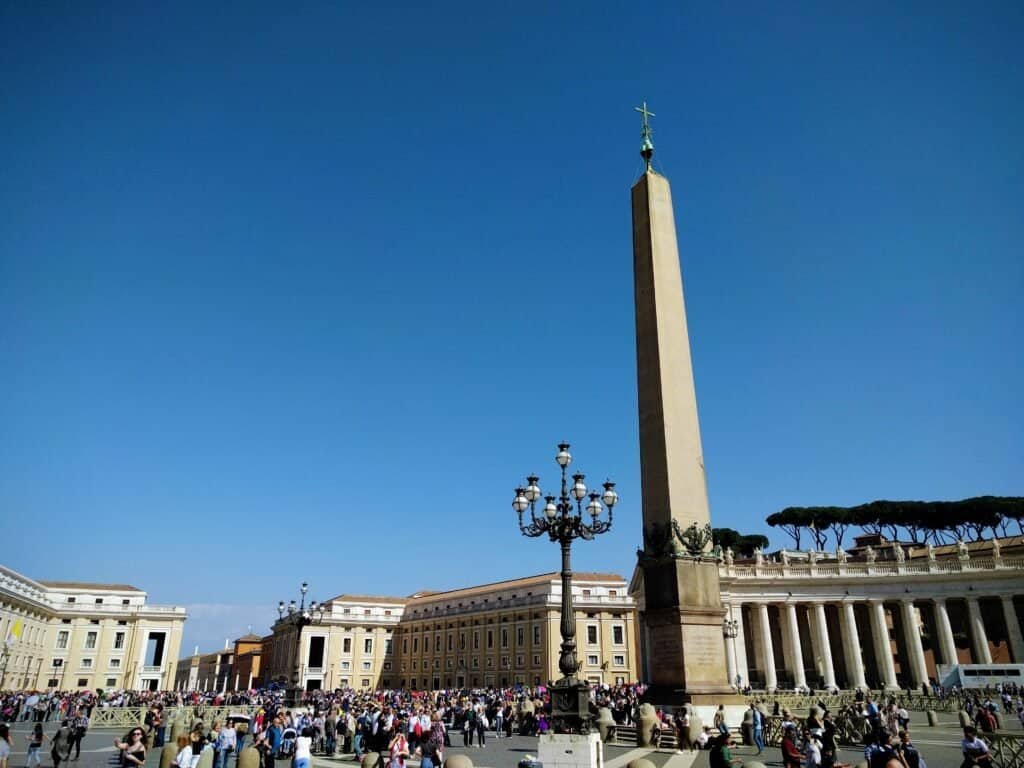
The square is a beautiful space to take in after the intensity of the museums and basilica. The colonnades curve around you in an embrace – the designer Bernini wanted them to represent the arms of the Church reaching out.
On Wednesday mornings, you might be able to catch the Pope’s weekly audience (free, but you need tickets from the Vatican website, and you should apply a few weeks ahead).
The historic centre
This is the area between the Vatican and the ancient sites. You’ll end up walking through it repeatedly, even when you’re heading somewhere else.
The Pantheon
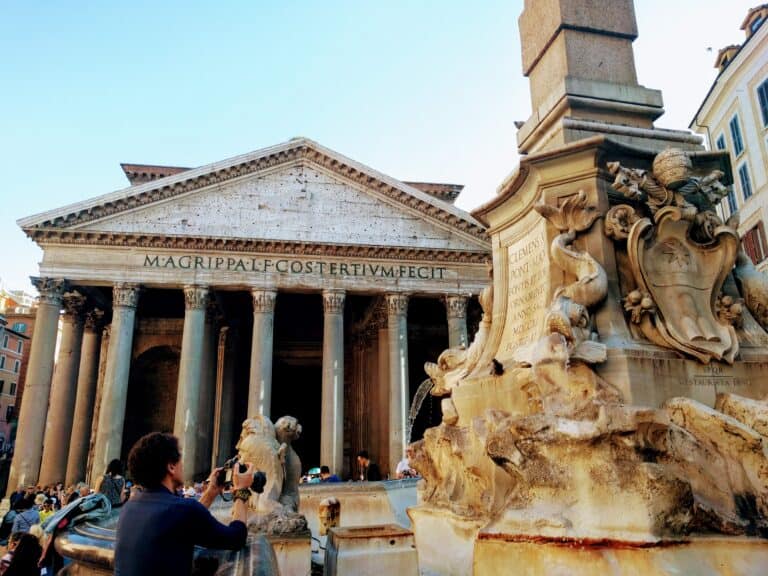
The Pantheon was built around 125 AD and its concrete dome is still the world’s largest unreinforced concrete dome. There’s a 9-metre open hole at the top (the oculus) that lets in a column of light that shifts across the interior throughout the day. When it rains, the water falls straight through and drains away through barely visible holes in the floor.
We loved how perfectly circular it was inside – this sounds like an odd compliment, but it had an almost mystical feel to it!
It takes about 20–30 minutes to look around, and entry costs €5 (you need to book a timed slot online). For something that quick, it’s one of the most memorable things you’ll do in Rome.
There are good coffee shops and gelaterias nearby, so it works well as a mid-morning stop.
Trevi Fountain
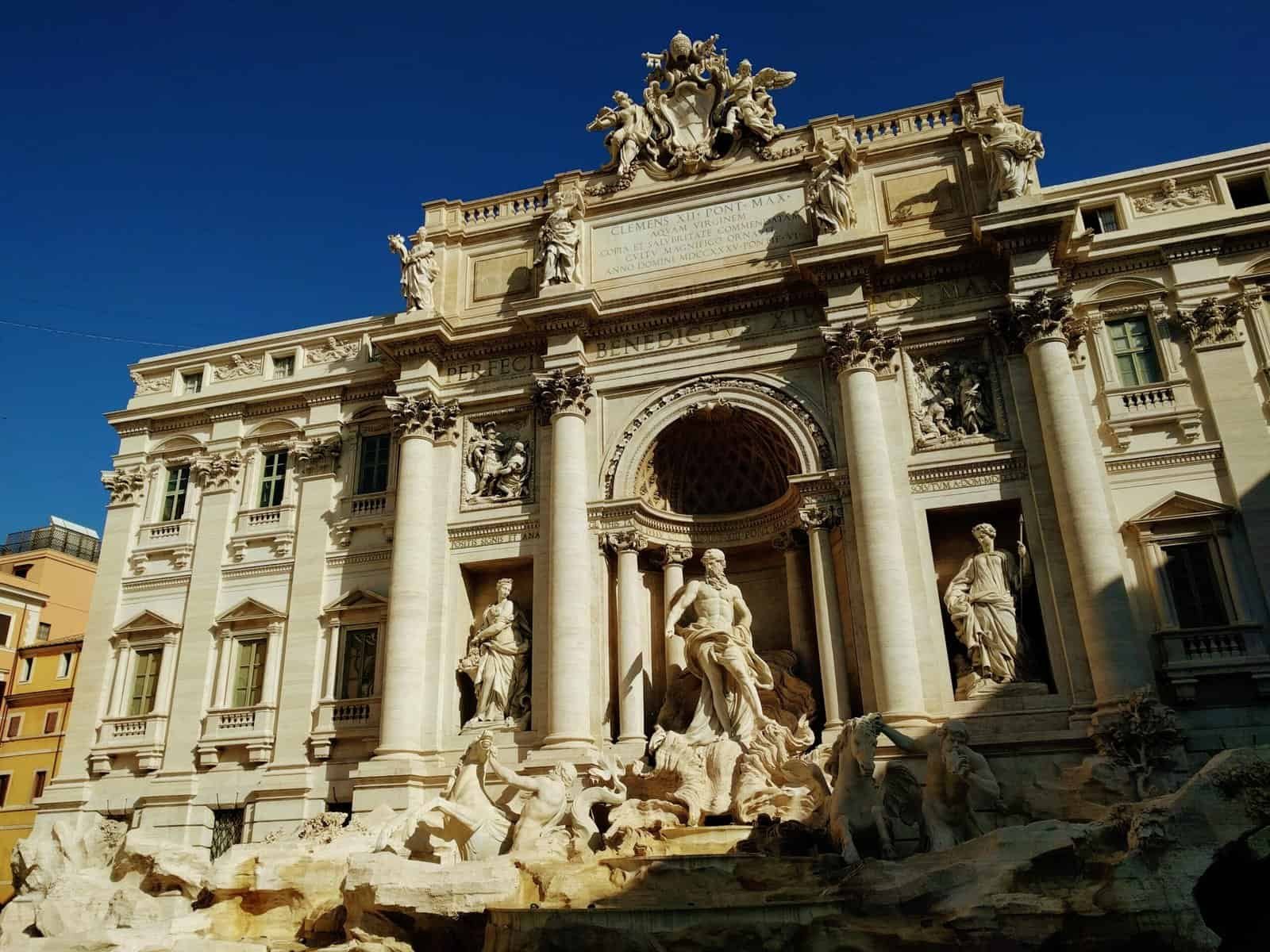
The Trevi Fountain is a massive Baroque sculpture carved into the side of a palazzo with water pouring over rocks and Neptune on his chariot. The tradition is to throw a coin over your left shoulder with your right hand, which is supposed to guarantee you’ll come back to Rome.
During the day it’s packed. In summer you’ll be shoulder-to-shoulder with hundreds of people trying to take the same photo, literally five people deep trying to get to the edge. We definitely advise getting there before 8am or after 10pm. We went late on our first trip and it was beautifully lit up, with maybe a dozen other people.
The restaurants immediately around the fountain are overpriced and not very good. Walk two or three streets away and the quality improves a lot.
Piazza Navona
Piazza Navona is a grand oval Baroque square with three fountains (the centrepiece is Bernini’s Fountain of the Four Rivers). It’s built on the site of an ancient Roman stadium (you can still see the elongated shape), and it’s a lovely place to sit and people-watch.
The same restaurant warning applies: eat a street or two back from the square itself.
The Spanish Steps
The Spanish Steps are a wide staircase connecting Piazza di Spagna to the Trinità dei Monti church at the top. It’s one of Rome’s most photographed landmarks, and it’s… fine.
You walk up, you look at the view, you come back down, you take some photos. There’s a good shopping area nearby (Via Condotti) if that’s your thing, but as a sight on its own, it’s more of a photo stop than an experience. Again, going early in the morning or later in the evening might be a bit quieter.
Don’t try sitting on the Spanish Steps for the perfect photo – its banned and you can be fined up to €400.
Piazza Venezia and the Vittoriano
The Vittoriano is the enormous white marble monument that Romans call the “Wedding Cake”.
It dominates Piazza Venezia. It’s dedicated to Italy’s first king and divides opinion: some people like the grandeur, others think it’s over the top.
You can go inside for free, and there’s a lift to the top terrace for a few euros.
The 360-degree views over Rome’s rooftops, the Forum and St Peter’s in the distance are excellent, and it’s far less crowded than the dome of St Peter’s. We think it’s one of Rome’s most underrated viewpoints.
Borghese Gallery
The Borghese Gallery is a smaller, more intimate alternative to the Vatican Museums, and in some ways a better experience. It’s housed in a 17th-century villa in the middle of Villa Borghese park, and the collection is stunning: Bernini’s sculptures (including Apollo and Daphne), Caravaggio paintings, Raphael, and Titian are a few highlights. The building itself is beautiful too, with frescoed ceilings and marble floors that make the whole visit feel like stepping into someone’s private collection.
Visits are limited to 360 people per two-hour slot, so it never feels crowded. You can stand in front of a Bernini sculpture with space to walk around it, which is a world away from being herded through the Vatican corridors shoulder-to-shoulder.
The trade-off is that tickets sell out, often a month or more ahead in peak season. Book on the official Borghese Gallery website first. If official tickets are gone, tour operators on GetYourGuide sometimes hold allocations and can get you in at a premium.
Allow about two hours (that’s what your ticket gives you anyway). Combine it with a walk through Villa Borghese park afterwards – the Pincio Terrace viewpoint over Piazza del Popolo is a 10-minute stroll from the gallery.
The neighbourhoods
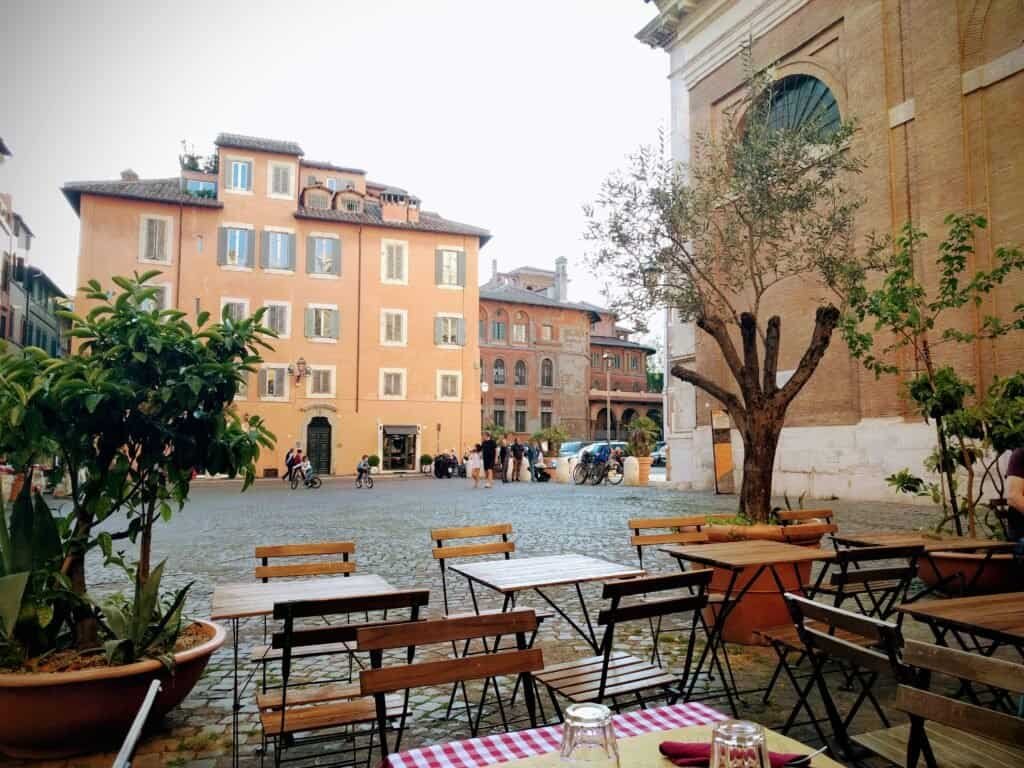
The big sights are brilliant, but the neighbourhoods are what make Rome feel like a living city rather than a museum you walk through. Don’t forget to spend some time wandering through the streets and plazas of Rome – there’s so many amazing neighbourhoods to find.
Our guide to the best places to stay in Rome highlights the best areas outside the main tourist trail. It will help you find some great hotels, as well as some suggestions on where to go even if you’re not staying there.
Trastevere
Trastevere sits across the Tiber from the historic centre and it’s where we spent most of our evenings. We loved it’s narrow and cobbled streets, the buildings are covered in ivy, and pavements that are covered in tables from local trattorias.
The main streets around Piazza di Santa Maria in Trastevere get touristy in the evenings. But step one or two streets back and you’ll find quieter spots where the menus are in Italian and the prices come down.
Trastevere is also the starting point for most of Rome’s best food tours, which tells you something about the quality.
Monti
Monti is the neighbourhood just behind the Colosseum. It has a village feel to it, with independent shops, vintage clothing stores, wine bars, and a small square (Piazza della Madonna dei Monti) where locals sit on the steps in the evenings. There’s a daily flea market there too.
It’s a great place to wander in the late afternoon after a morning at the Colosseum and Forum, and it’s where we’d recommend staying if you want to be close to the ancient sites without being right on top of the tourist crowds.
We built it into our 4-day Rome itinerary as the afternoon on Day 1, and we’d do the same thing again
Testaccio
Testaccio is a residential neighbourhood south of the centre that most tourists don’t visit. It was historically the slaughterhouse district, and it has some of the city’s most authentic trattorias and a grittier, less polished feel than the centre.
Dishes like coda alla vaccinara (oxtail stew) and trippa alla romana started here because the workers got the cuts nobody else wanted, and the trattorias in the area have been cooking them ever since.
The Testaccio Market is a covered food hall with stalls selling fresh produce, supplì, and trapizzini (triangular pizza pockets stuffed with things like oxtail or chicken). It’s open mornings and into early afternoon on weekdays, and closed on Sundays. If you’re interested in Roman food beyond the restaurant menu, it’s one of the best places to spend an hour.
The Jewish Ghetto
The Jewish Ghetto is one of Europe’s oldest Jewish communities, a small area near the Tiber with its own distinct food tradition.
Roman-Jewish cuisine is a thing in itself, and the two dishes you should try are carciofi alla giudia (whole artichokes deep-fried until the leaves are golden and crispy) and filetti di baccalà (fried salt cod). The restaurants on Via del Portico d’Ottavia have been serving these for generations.
It’s also a historically significant area worth walking around even if you’re not eating. The Portico d’Ottavia itself is a first-century BC ruin, and there are plaques and memorials throughout the neighbourhood marking its history, including the deportation of over 1,000 Roman Jews in 1943.
Other viewpoints and green spaces
The Orange Garden (Giardino degli Aranci) on the Aventine Hill is a small, quiet garden with a terrace that looks out over Rome and St Peter’s dome. It’s a popular sunset spot but nowhere near as crowded as the main viewpoints.
Nearby, the Knights of Malta keyhole on Piazza dei Cavalieri di Malta frames a perfect view of St Peter’s dome through a hedge. It’s free, it takes about 30 seconds, and the queue is usually short.
Villa Borghese is Rome’s main central park, just above the Spanish Steps. It’s big enough to feel like you’ve left the city, with a boating lake, a temple, and panoramic views from the Pincio Terrace over Piazza del Popolo. It’s also home to the Borghese Gallery.
Eating and drinking in Rome
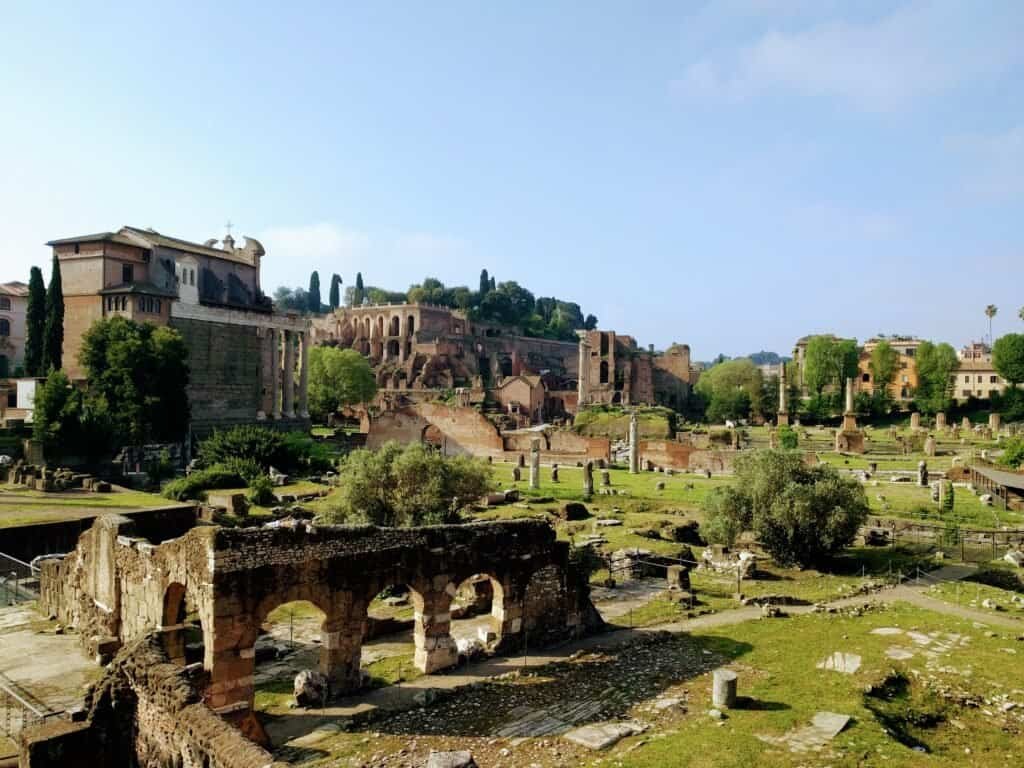
The food in Rome is some of the best we’ve had anywhere, and you don’t need to spend much. You can eat extremely well here on a modest budget as long as you know where to go.
The main thing to avoid is any restaurant with laminated menus in several languages, photos of the food outside, or someone standing in the doorway trying to get you to sit down. These places cluster around the major piazzas and tourist sights, and the food is almost always mediocre and overpriced. Walk two streets in any direction and you’ll find somewhere better.
What to eat
Rome has its own set of traditional dishes, and most restaurants stick to them. The big three pastas are cacio e pepe (pecorino and black pepper), carbonara (egg, pecorino, guanciale, black pepper – never cream), and amatriciana (tomato, guanciale, pecorino). If a restaurant does these well, everything else on the menu will probably be good too.
Beyond pasta, supplì are fried rice balls with molten mozzarella in the centre, sold at street counters for a couple of euros. Pizza al taglio is Roman-style pizza by the slice, sold by weight – you point at what you want, they cut it, and you pay by the gram. And in the Jewish Ghetto, carciofi alla giudia – whole artichokes deep-fried until crispy and golden – are amazing!
For gelato, avoid anywhere with mountains of brightly coloured, piled-up gelato in the display. That’s artificial and full of stabilisers. The good places store it in covered metal tubs, the colours are muted and natural, and pistachio is an earthy green rather than neon.
Where and when to eat
The best areas for food are Trastevere, Testaccio and the Jewish Ghetto. Monti has good wine bars and aperitivo spots. Avoid eating on any of the major piazzas – Piazza Navona, the area around the Trevi Fountain, Piazza di Spagna – where prices are inflated and the food is mediocre.
Romans eat lunch from about 12:30 to 2pm and dinner from 8pm onwards. A lot of restaurants don’t open for dinner before 7:30pm. If you walk into an empty restaurant at 6pm, it’s almost certainly a tourist place. The good trattorias are full at 9pm.
One thing worth knowing: most restaurants add a coperto (cover charge) of €1–3 per person, which covers bread and table service. It’s standard, not a rip-off. Tipping beyond that isn’t expected, though rounding up or leaving a euro or two for good service is appreciated.
Doing a food tour on your first evening is something we’d recommend to anyone visiting Rome. You’ll learn how to spot the good places, what to order, and which streets to avoid for the rest of your trip. GetYourGuide has well-rated food tours in Trastevere and the historic centre – we’re big believers in doing one early rather than saving it for the last night.
Drinking
Aperitivo culture is a big part of the evening routine. Between about 6 and 8pm, bars serve drinks – usually a Spritz, Negroni or a glass of wine – with complimentary snacks like a bowl of crisps or nuts.
For wine with dinner, the house wine (vino della casa) at a decent trattoria is almost always good and costs a fraction of bottled options.
If you order a latte in Italy, you’ll get a glass of warm milk. The coffee you’re looking for is a caffè latte. And cappuccino is a morning drink – Romans don’t order it after about 11am. Nobody will stop you, but you’ll get a look.
Experiences worth booking
A guided Colosseum and Forum tour. They’re both great to wonder round, but a guide will give a lot more context and history. Book on GetYourGuide.
A skip-the-line Vatican tour. The alternative is a 2–3 hour queue and then navigating 7 kilometres of galleries. A guide handles the logistics and explains what you’re seeing. Book on Viator.
A food tour in Trastevere or Testaccio. You’ll eat better for the rest of your trip because of what you learn on the first evening. Book on GetYourGuide.
Borghese Gallery. A smaller, less exhausting alternative to the Vatican Museums, with an incredible collection of Bernini sculptures and Caravaggio paintings. Book on the official Borghese Gallery website at least a month ahead, or look on GetYourGuide if official tickets are gone.
A cooking class. Several operators in Trastevere offer hands-on pasta-making classes where you learn carbonara or cacio e pepe from scratch. It’s a great activity for a rainy afternoon. We like this one.
Day trips from Rome
If you have more than 3–4 days, a day trip is a brilliant way to see another side of Italy without changing hotels.
If you’re planning a longer trip around Italy, our 10-day Italy itinerary connects Rome, Florence and Venice by train and includes a Naples extension.
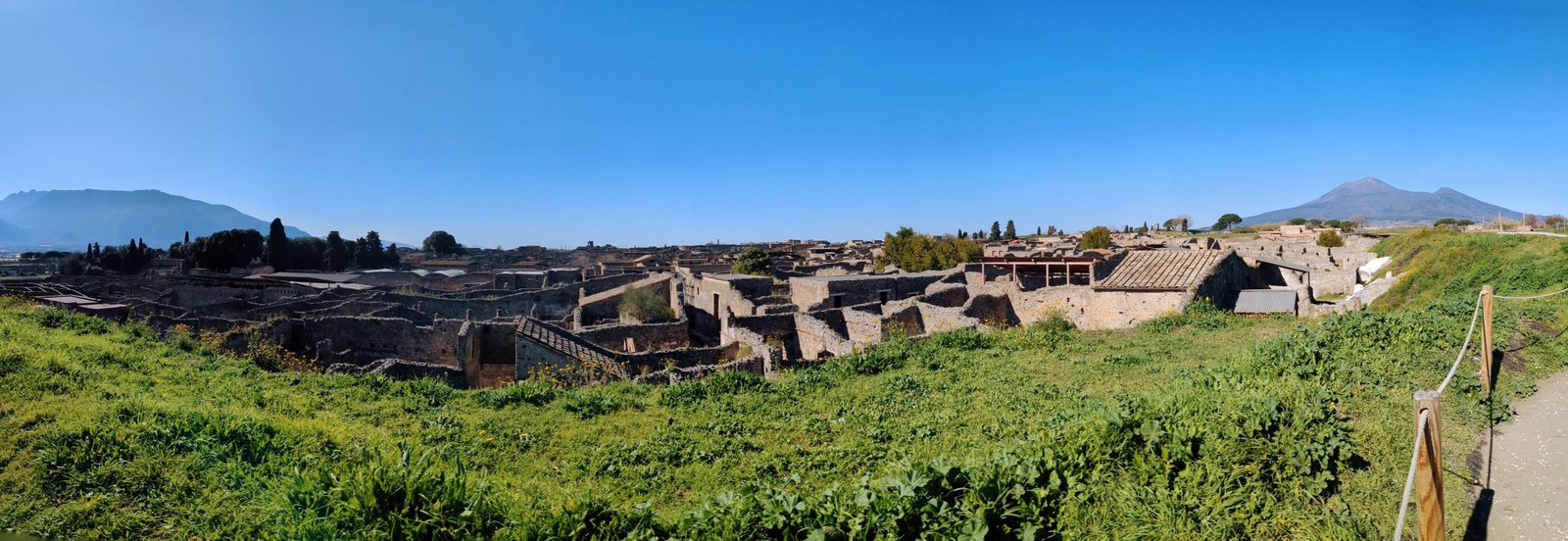
Pompeii and Naples: The high-speed train to Naples takes about 1 hour 10 minutes, and from there it’s a local train to Pompeii. It’s a brilliant day out, whether you go from Rome or Naples. Our guide on how to get from Naples to Pompeii covers all the transport options.
Ostia Antica: Rome’s ancient port city, just 30 minutes by regional train. Less famous than Pompeii but still well-preserved, with mosaics, apartment blocks, a theatre, even an ancient bar with a menu painted on the wall. It’s an option in our Rome itinerary and wish we’d had more time for it.
Tivoli: Two grand villas about 30 minutes east by regional train. Villa d’Este has Renaissance gardens with hundreds of fountains; Hadrian’s Villa is a vast imperial archaeological complex.
Orvieto: A stunning hilltop town in Umbria, about an hour by high-speed train. It’s famous for its cathedral, underground tunnels, and Orvieto Classico white wine.
For a full breakdown of Italy’s rail system, see our guide to getting around Italy by train.
Frequently asked questions
Plan your Rome trip
Seeing Rome works best if you have a rough plan for the mornings and leave the afternoons open, rather than scheduling everything. The sights are spread out enough that you’ll want to be intentional about the big ones, but having time to spare will help you find a fab trattoria, a quiet piazza at dusk, or a pretty cobbled street.
If you’re ready to start putting your days together, our 4-day Rome itinerary maps out a relaxed day-by-day plan that covers the highlights without making it feel like a race. It’s the itinerary we followed ourselves. Our guide to the best places to stay in Rome makes finding a decent hotel, and the best location, easy.
If you’re still in the earlier stages of planning, these might help:
✈️ Our Italy travel guide brings everything together in one place
✈️ How to get around Italy by train covers everything from booking to which trains to take
✈️ Is Italy expensive to visit? breaks down realistic daily budgets
✈️ 10 best Tuscany wine tours from Florence if Florence is your next stop
A small favour: we're trying to gather some feedback to help make our blog even better
If you have any feedback on how we can improve, please add it below. Big or small, we'd love to hear.