Underrated cities in France tourists often skip
France has no shortage of cities worth visiting, but most trips end up revolving around the same familiar names. Paris dominates first visits, while the south pulls people back again and again. In between are cities that are easier to travel in, better value, and far more relaxed – but rarely make it into standard itineraries.
This guide focuses on underrated cities in France that work well as bases. These are places where you can settle in for a few days, eat well without planning your life around reservations, and explore on foot or by public transport.
We’ve visited several of the cities below across different trips. A couple of the cities we haven’t visited yet are included because they’re consistently recommended by travellers whose travel style is similar to ours – and they’re on our own list to visit next.
If you’re still deciding whether a city base makes sense at all – or whether you’d be better off heading to the countryside – our guide to France beyond Paris puts these options into context.
What makes a city “underrated” in France?
In this context, underrated doesn’t mean unknown. It usually means a city that:
- works well as a base, not just a stop
- is easy to get around without a car
- has a strong local food scene at sensible prices
- feels lived-in rather than designed for visitors
- offers better value than headline destinations
In practice, these are places that allow authentic and sustainable travel – two ideas we love.
Quick comparison: underrated French cities by travel style
| Travel style | Good alternatives to Paris | Why they work |
|---|---|---|
| Food-focused | Lyon | Exceptional food culture without hype |
| Short city break | Lille | Compact, affordable, easy by train |
| Coast + culture | Marseille | Mediterranean setting with real city life |
| Relaxed & creative | Nantes | Green, low-key, easy to live in |
| Quiet and compact | Metz | Small, refined, ideal for slow trips |
Use this as a starting point – the sections below explain who each city suits and why it works in practice.
Lyon
Best for food, walkability, and first trips beyond Paris
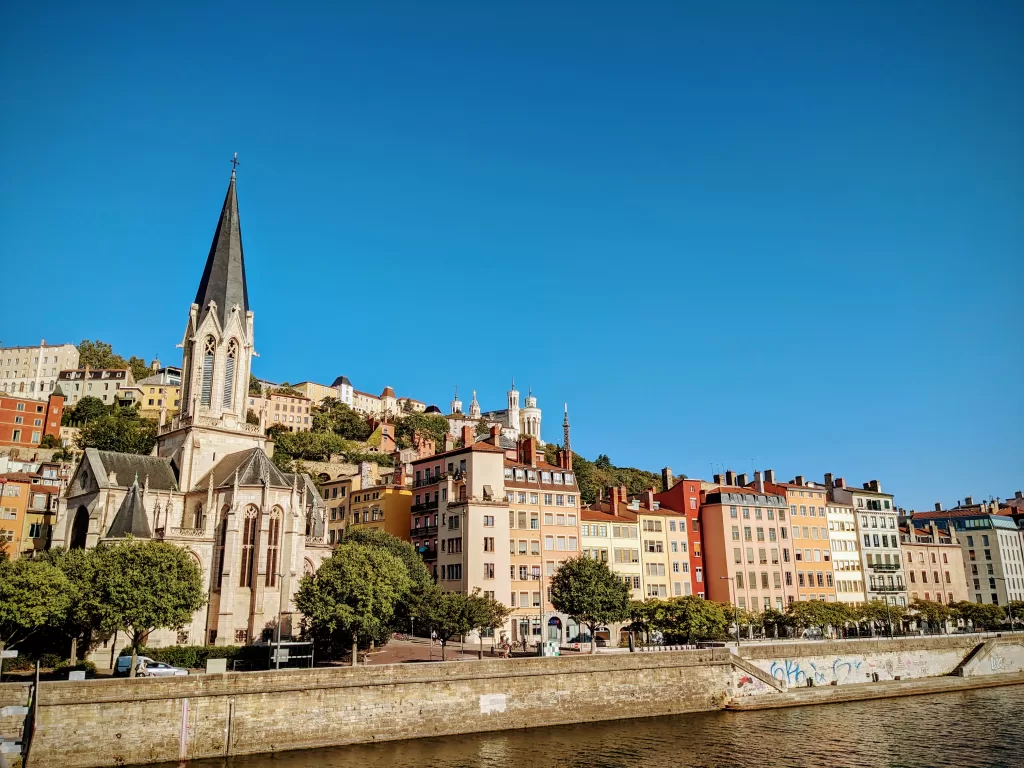
Lyon is often described as France’s food capital, then oddly skipped. In reality, it’s one of the easiest cities in the country to enjoy. The centre is compact, neighbourhoods are distinct, and eating well doesn’t require advance planning or inflated budgets.
We often recommend Lyon to people who liked Paris for its food and neighbourhoods, but found it tiring after a few days. Lyon keeps the quality – bakeries, bouchons, markets – without the scale or intensity.
It works particularly well if you want:
- a strong food scene without fuss (the bouchons – family-run restaurants selling traditional French food – are great, delicious and cheap)
- a city you can walk end-to-end
- good rail connections for easy day trips, or to move onto another city
Our guide to the best places to go in Lyon will help you focus on where to go and see.
Good to know: Lyon doesn’t have many big headline sights. Its appeal is how easy it is to live in for a few days.
Lille
Best for short breaks, value, and train-first travel
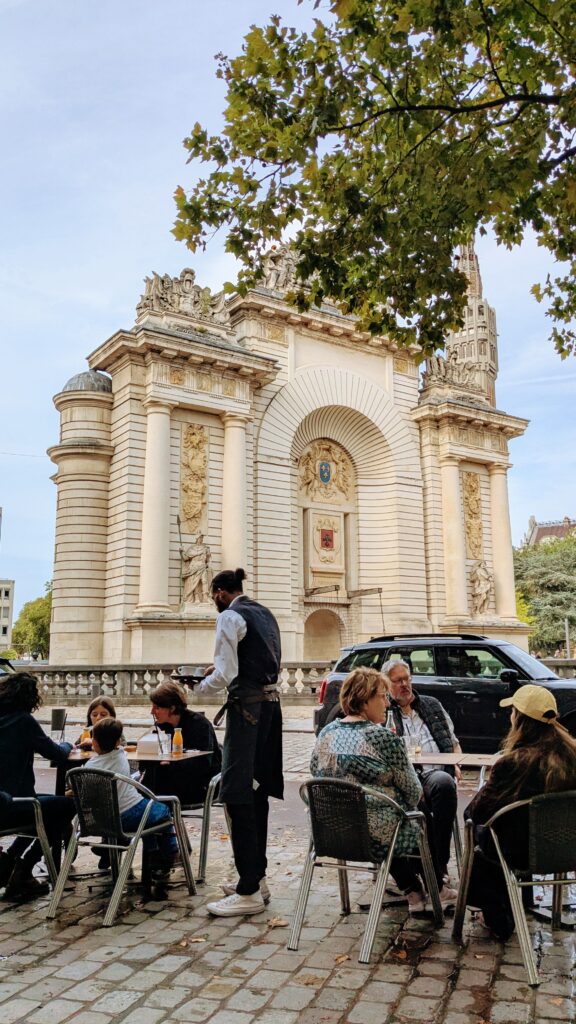
Lille is one of the most practical French cities for a short break. It’s part of the Flemish region near the Belgian border and it feels different to a lot of France, with a more medieval feel.
We recommend Lille when someone wants a long weekend that doesn’t feel rushed. Stay central, walk everywhere, and focus on food, markets, and neighbourhoods rather than trying to “do” the city.
It’s a strong choice if you want:
- an affordable city break (especially if you’re getting the Eurostar from London – only 90 minutes door to door)
- minimal travel time
- good food without Paris prices
If you’re planning a short trip, our perfect weekend in Lille itinerary shows how to structure a stay without cramming too much in.
Good to know: The weather can be unpredictable, but the city is compact enough that it rarely affects plans (and there’s a lot to do indoors if it does).

Marseille
Best for coast, character, and a less polished city break
Marseille is often misunderstood and can be very marmite – we loved it, but many hate it. It isn’t a resort city and it isn’t polished – it’s a working Mediterranean port with strong neighbourhood identities.
We usually recommend Marseille to travellers who want the coast but don’t want a resort. Base yourself centrally, plan a couple of calanques or coastal days, and spend the rest of the time eating, walking, and exploring different districts.
Marseille suits trips where you want:
- access to the sea without leaving the city
- neighbourhoods with character
- a city that feels local and lived in
If you want a practical sense of what’s worth prioritising, our guide to beautiful places to go in Marseille focuses on areas and viewpoints that work well without overplanning.
Good to know: you might not like Marseille’s grittiness, but you’ll still find enough to do (and eat) anyway.
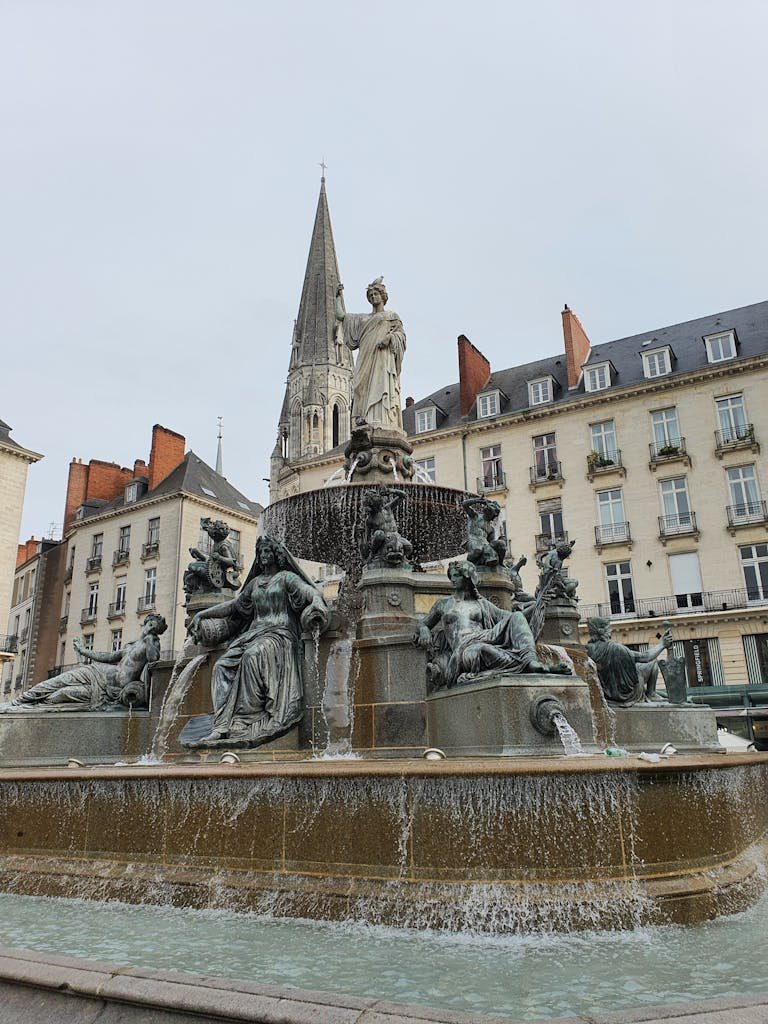
Nantes
Best for a relaxed pace and everyday city life
Nantes rarely features on first-time itineraries. It’s green, calm, and easy to get around, with plenty of space to slow down between meals and walks.
We particularly liked the area along the river and around Île de Nantes, which is perfect for a long walk set alongside cafés and art spaces.
We tend to recommend Nantes to people who enjoy being in a place rather than sightseeing constantly. It’s a good option if you want cafés, riverside walks, and neighbourhoods without pressure to rush.
Nantes works well if you want:
- a low-key city with breathing space
- easy cycling and walking
- a city with a relaxed and artistic vibe
Good to know: If you want dramatic old towns or major landmarks, Nantes may feel understated.
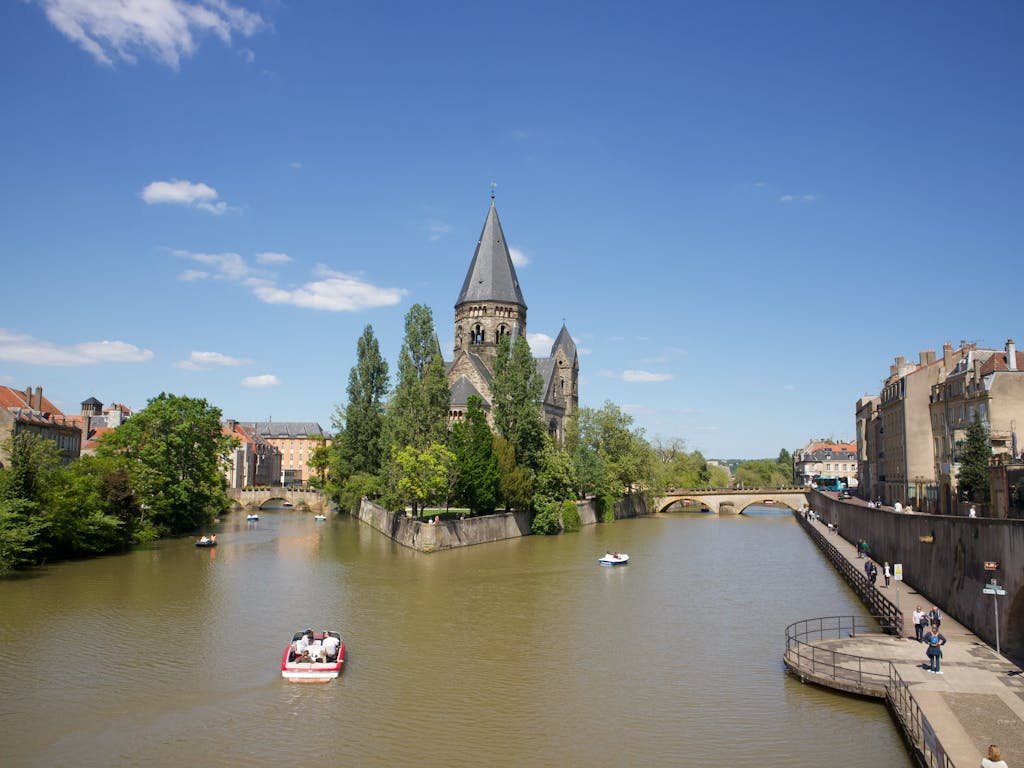
Metz
Best for architecture lovers and short, quiet stays
Metz is compact, elegant, and often skipped in favour of Strasbourg. That makes it a good choice for a slower, shorter trip. The historic centre is walkable, the cathedral is impressive, and the pace is calm.
We recommend Metz when someone wants a refined city break without crowds or complex planning.
It works best if you want:
- a small city you can cover on foot
- a calm atmosphere
- a base for a few unhurried days
Good to know: Metz is better for two to three nights than a full week, as you might struggle to fill your time. If you want to spend longer there, consider adding a few day trips.
How to choose the right city in France
If you’re stuck between options, these practical rules usually help:
- Food-first trip: Lyon
- Easy long weekend: Lille
- Coast without resort towns: Marseille
- Low-key and relaxed: Nantes
- Quiet and compact: Metz
If you’re unsure whether a city base makes sense at all – or whether you’d be better off in a region – this is where stepping back helps.
Our guide to France beyond Paris explains how cities and regions fit different trip styles
Why these cities make a great trip
Once you’ve settled on the right city, planning a France trip usually gets much simpler. Using one city as a base makes accommodation easier, cuts down on travel time, and gives you the flexibility to shape days around food, neighbourhoods, and short day trips rather than constant moving.
In practice, that often means:
- staying central and walking most places
- using trains or local transport for the odd day trip
- leaving gaps in the schedule instead of filling every day
Cities like the ones above tend to work well because they’re designed for everyday life, not just sightseeing.
If you’re now thinking about how a city base fits into a wider France itinerary, or whether it makes sense to combine a city with a quieter region, our guide to France beyond Paris helps you put that decision into context before you start booking.